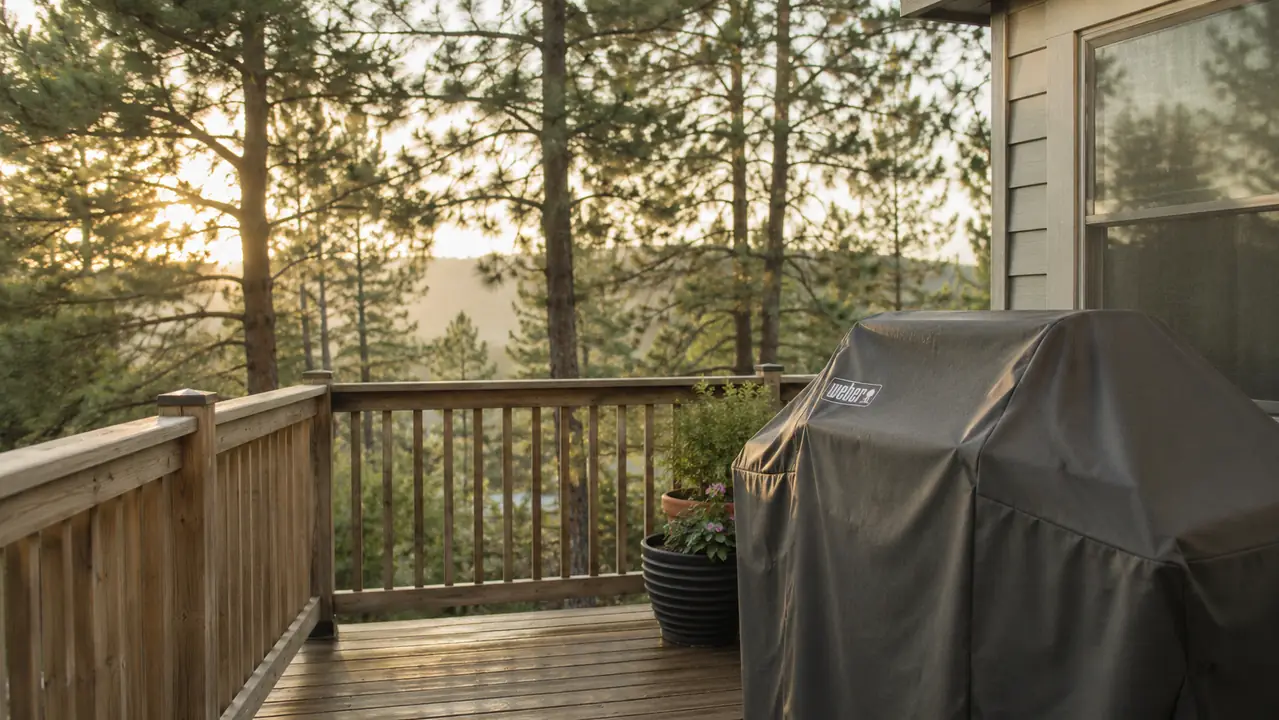
Most grill owners I know spend the big money on the grill and then ignore the one thing that decides how long it lasts: the cover. I did that for years. I have cooked on the same deck in north Georgia for over twenty years, and in that time I have watched a firebox rust through and a cart lose a wheel to a wet frame. The first time I had to replace a rusted firebox, I told myself I would never let steel sit bare again. The cover I put over my current offset smoker is the Simple Houseware 55-inch heavy-duty model, and it has sat through rain, sun, and pine straw without giving up.
Every rainstorm and every afternoon of UV rays takes a little bite out of a bare grill. People ask me what cheap upgrade makes the biggest difference, and I always point to the cover. Whether your grill is a charcoal kettle, an offset smoker, or a gas grill, the idea is the same: steel does not like weather. What follows are the ten reasons I have seen this idea prove itself on my own deck.
Start With the Cover That Keeps Weather Off Your Steel
The Simple Houseware 55-inch heavy-duty cover is the one I use on my offset smoker. It is built for a 55-inch gas grill, fits a large offset smoker nicely, and it holds a 4.6-star average from more than 54,000 reviews. If you are tired of tarps and bungee cords, this is the cover to check first.
Amazon Check Today's Price on Amazon →Rain Is the Slow Killer, and a Waterproof Cover Stops It Cold
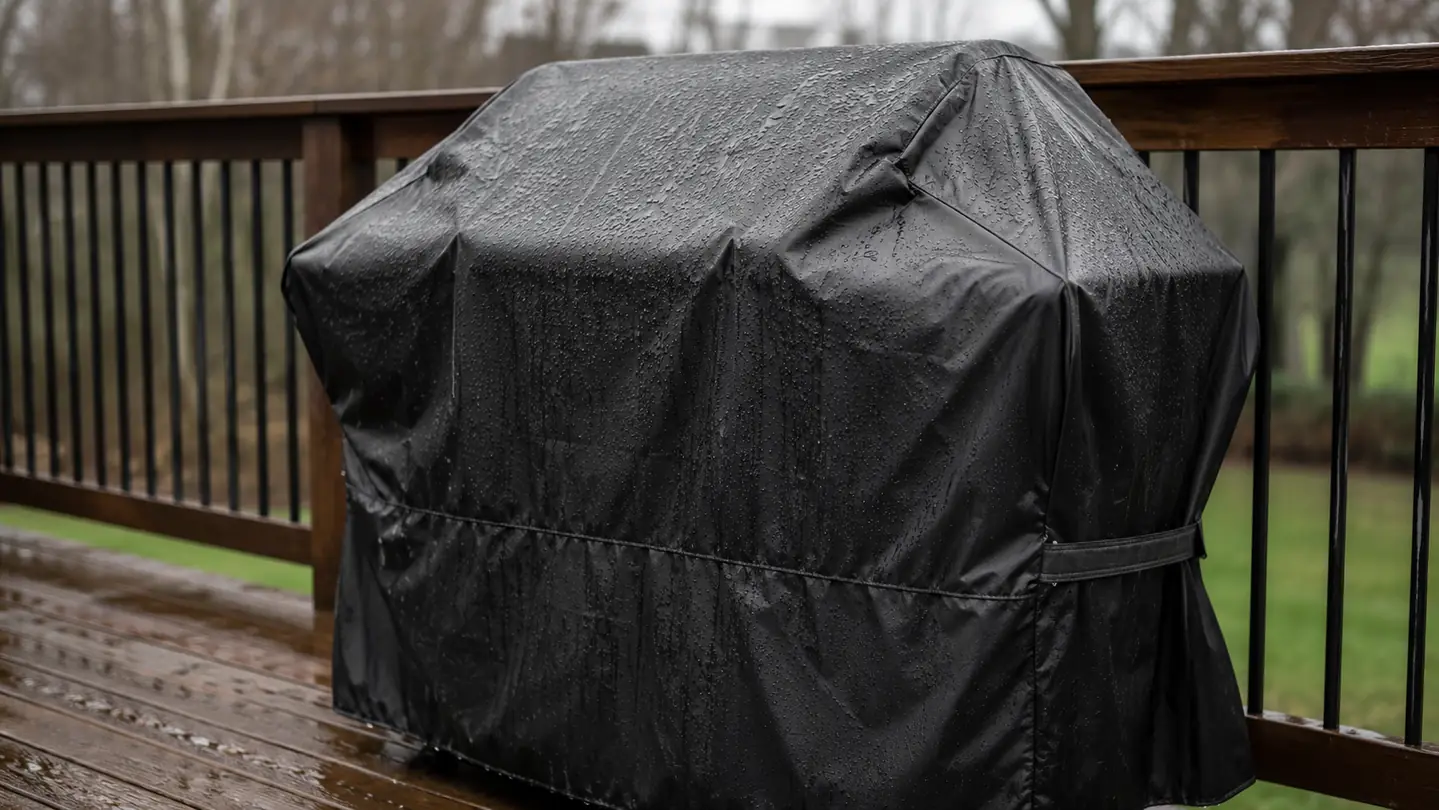
Water works its way into every seam, screw hole, and the gap where the firebox meets the cart, then sits there until the steel starts to flake. A heavy-duty cover keeps the rain off in the first place. The Simple Houseware cover sheds water instead of holding a puddle on top, and when I pull it off after a storm, my smoker is dry enough to light without wiping anything down. A cover that lets water pool is almost as bad as no cover at all, because pooled water finds its way through the stitching over time.
The Sun Fades Paint and Cracks Plastic Even When It Is Not Raining
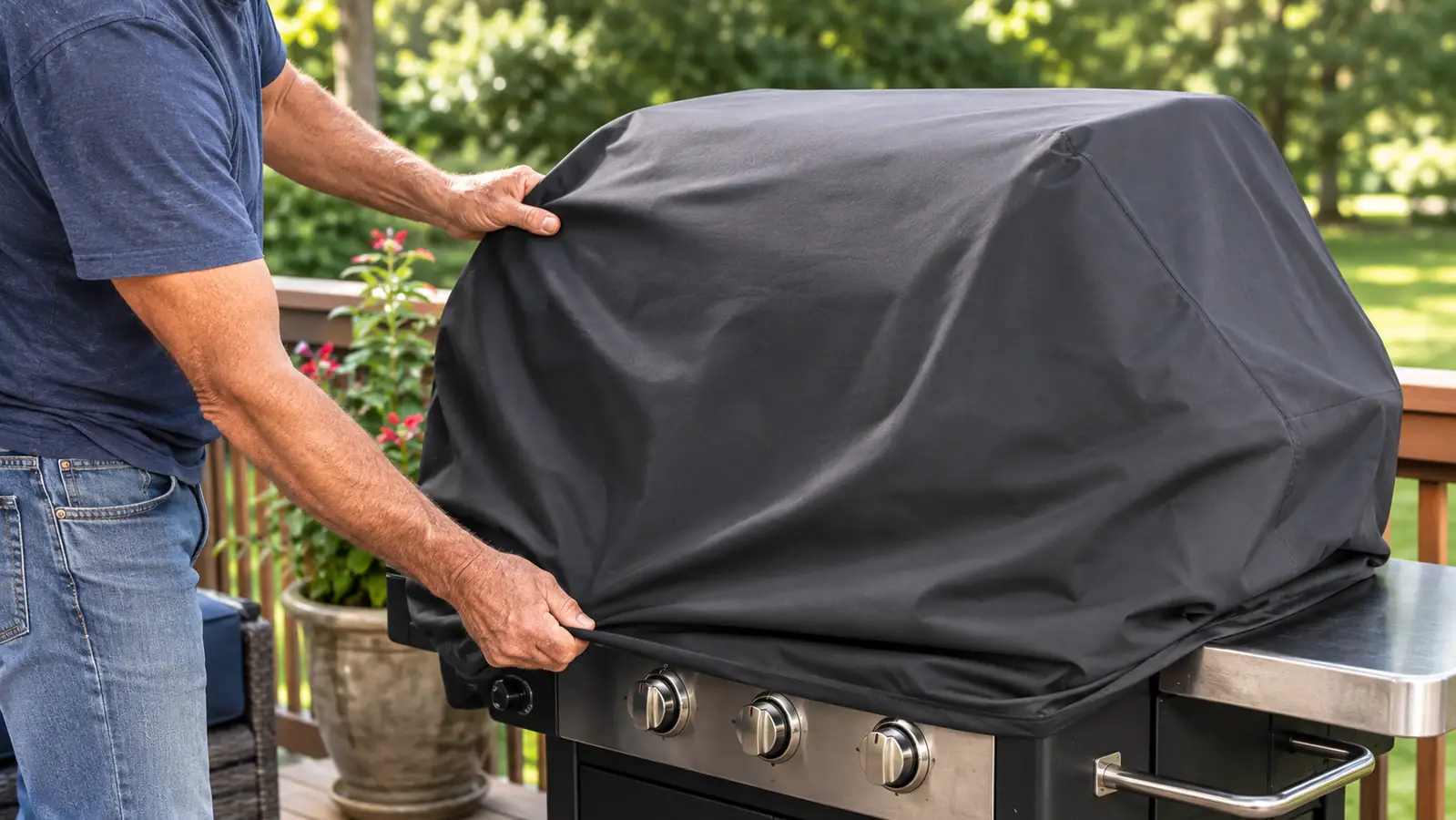
UV light does its damage whether or not there is a cloud in the sky. It turns lid paint chalky, makes handles brittle, and ages any exposed plastic. My offset smoker gets afternoon sun on the side, and since I started keeping it covered, the paint has stopped fading and the thermometer lens stays clear. The sun also dries out rubber trim and gaskets, so keeping the cover on means those parts stay flexible a lot longer. UV damage is slow, but it is constant, and constant is exactly what a grill does not need.
It Keeps Wasps, Mice, and Spiders From Treating Your Grill Like a Hotel
A dark grill full of old drippings is prime real estate for wasps, mice, and spiders. I have opened fireboxes in spring to find nesting material and droppings, and it is not a fun way to start the season. A cover that fits the whole grill closes off most of the easy entrances. The fabric is heavy enough to stay put in the wind, so a gap does not open at the bottom. No nests, no droppings, and a lot less time spent cleaning out someone else's home before I build a fire.
Ash and Grease Turn Into Rust Paste When Rain Gets Inside
When rain gets into a grill that has ash and old drippings, the mess becomes a wet sludge that holds moisture against the metal. That is one of the fastest ways to start rust on a firebox floor. The cover keeps rain out, so the ash stays dry and the drippings do not turn into a coating that eats paint. I spend less time cleaning because the weather is not doing the damage for me. An hour of scrubbing later in the season costs more than the cover did, so the cover is the cheaper job by a mile.
Dew and Humid Nights Are Covered Too, Even Without a Drop of Rain
Georgia nights get damp no matter what the forecast says. A bare grill cools down and collects dew on every surface, and that film of moisture is enough to start surface rust on cast iron and mild steel. Since I started covering my smoker, the morning start-up is a quick wipe instead of a wire-brush job. It keeps the cooking surfaces closer to ready every single day.
You Will Spend Less Time Scrubbing and More Time Cooking
When the cooking grate and heat deflectors stay dry, they stay cleaner. Wet ash, rust flakes, and baked-on drippings are what turn a quick cook into a cleanup project. A cover keeps that from happening between cooks. These days I get the fire going sooner and spend the saved time actually cooking instead of scraping.
The Legs, Wheels, and Cart Rust Out First, and a Cover Protects Them
Most grills do not die from a hole in the lid. They die from the bottom up. Water collects around the legs, wheel brackets, and shelf mounts, then rust eats the thinnest steel. A cover that reaches down over the full cart keeps those joints dry. The frame under my offset smoker has stayed solid through several wet years because the weather never gets a grip on it.
A Rusted-Through Firebox Costs Far More Than Any Cover
Buying a replacement firebox or a new cart will set you back far more than a quality cover, and the repair is a miserable weekend job. A heavy-duty cover is the low-cost way to avoid that repair altogether. When I inspect a grill with rust holes along the bottom edge, it is almost always one that spent its nights bare. Keeping the steel dry is the difference between a grill that lasts a decade and one that gets scrapped after three years. The Simple Houseware cover has kept my smoker on the good side of that line.
Windblown Leaves and Pine Straw Never Sit Against the Steel
Leaves and pine straw collect in every corner of an uncovered grill, and once they get wet, they hold moisture against the paint and the metal. My deck is ringed by oak and pine, so this is a constant battle. A fitted cover keeps the surface clean, which means there is nothing holding damp debris against the steel after a storm. That alone cuts down on rust, but it also saves me from pulling a dozen pine needles out of the air vents before every burn.
A Covered Grill Stays Looking Good and Holding Its Value
A grill that still looks good after five years is rare, but looks matter more than people admit. If you ever sell the place or pass the grill along, a clean body is worth something. A grill that looks good also gets used more often. When my rig looks ready, I want to fire it up, and that is the whole point of owning it. The cover is what keeps the outside looking like a tool instead of a rust pile ready for the scrap pile.
What I'd Skip
If you keep your grill under a roof or in a garage, you can get away with a lighter cover. For a grill that sits out in the open, avoid the ultra-thin universal covers that crack after one winter. They are a false economy. I would also skip any cover that does not fit the dimensions you measured. The heavy-duty Simple Houseware cover that stays on my smoker is the kind of fit I mean: snug at the bottom, no flapping, no puddles. Measure twice and buy once.
I have been through enough cheap covers to know the difference. The heavy-duty one is the only one that made it through a full north Georgia winter without cracking.
Stop Letting the Weather Decide When Your Grill Dies
If you are still leaving your grill bare or fighting a tarp and bungee cords every weekend, look at the Simple Houseware 55-inch heavy-duty cover. It is the cover I reach for every time I step back inside, and after more than 54,000 reviews, it still holds a 4.6-star average. Check today's price on Amazon and see if it fits your grill.
Amazon Check Today's Price on Amazon →