
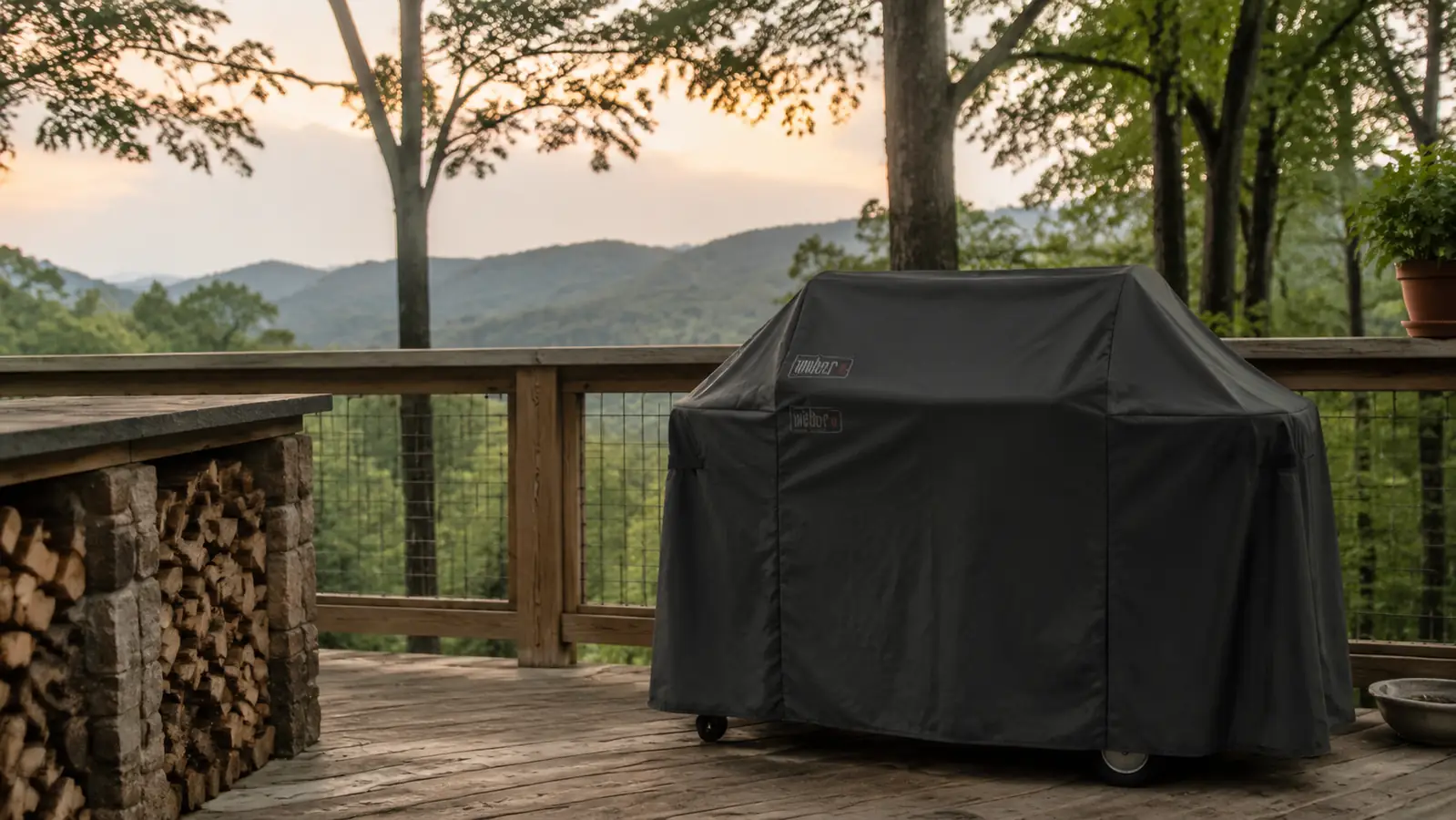
I have spent more than twenty years watching grill covers die on this deck, and rain is almost never what kills them. Wind snaps the strap anchors. Sun turns the fabric brittle. After that, the seams split and the first good thunderstorm finishes the job. So when I ordered the Simple Houseware 55-inch heavy-duty grill cover last fall, I did not care much about the word waterproof in the listing. I cared about fabric weight, seam stitching, and how the cover was held down. Eight months later, after a north Georgia winter of freezing rain and long damp stretches, here is what I found.
An honest note up front: the listing calls this a gas grill cover, and I do not run propane. I cook on a 22-inch kettle and an offset stick burner I bought used and welded a new baffle into. The offset is close enough to a three-burner gas grill in footprint that the 55-inch cut drops over it about the way it would over a propane model, so I could test it for real. What I can judge firsthand: fabric, seams, rain, wind, sun, and condensation. What it would be like to live with on a gas grill day to day, I will flag as a question for you instead of a claim from me.
The Quick Verdict
A genuinely heavy cover that has already outlasted every light one I used before it. Measure your grill first, and skip it if you store yours inside.
Amazon Check Today's Price →A cover you buy once instead of every other year
If you are tired of cracked, faded covers that pool water, this is the heavy-duty option worth measuring your grill for. See the fit notes and today's price on Amazon.
Amazon Check Today's Price on Amazon →How I Tested This Cover
The deck sits behind the house in the foothills above Dahlonega, under a row of oaks that drop leaves and sap and the occasional branch in a storm. October through April is the wet season up here: drizzle that lasts a week, thunderstorms that come through sideways, and at least one ice event every winter. That is exactly the weather that finds the weak spots in a cover, so I did not have to invent tests. I put the cover on the offset in early October, took it off for a cook most Sundays, and put it back on when the fire had gone cold.
I come at this from a different angle than most backyard reviewers. I spent thirty years as an HVAC contractor, which means I spent thirty years watching water find its way into places people thought they had sealed. I know the difference between a water barrier and a water repellent, and I know a seam is only as good as its thread and its tension. So my notes on this cover are not just about whether my hand stayed dry. They are about where the water went, how the fabric behaved when it froze, and whether the parts that usually fail first showed any sign of giving up.
I also checked the underside once a month, because the quiet killer of grills under covers is condensation, not rain. A cover that traps damp air against a warm lid can do more damage than no cover at all. I wanted to know whether mold would show up in the folds and whether water would collect in the creases along the top.
What Heavy-Duty Actually Buys You
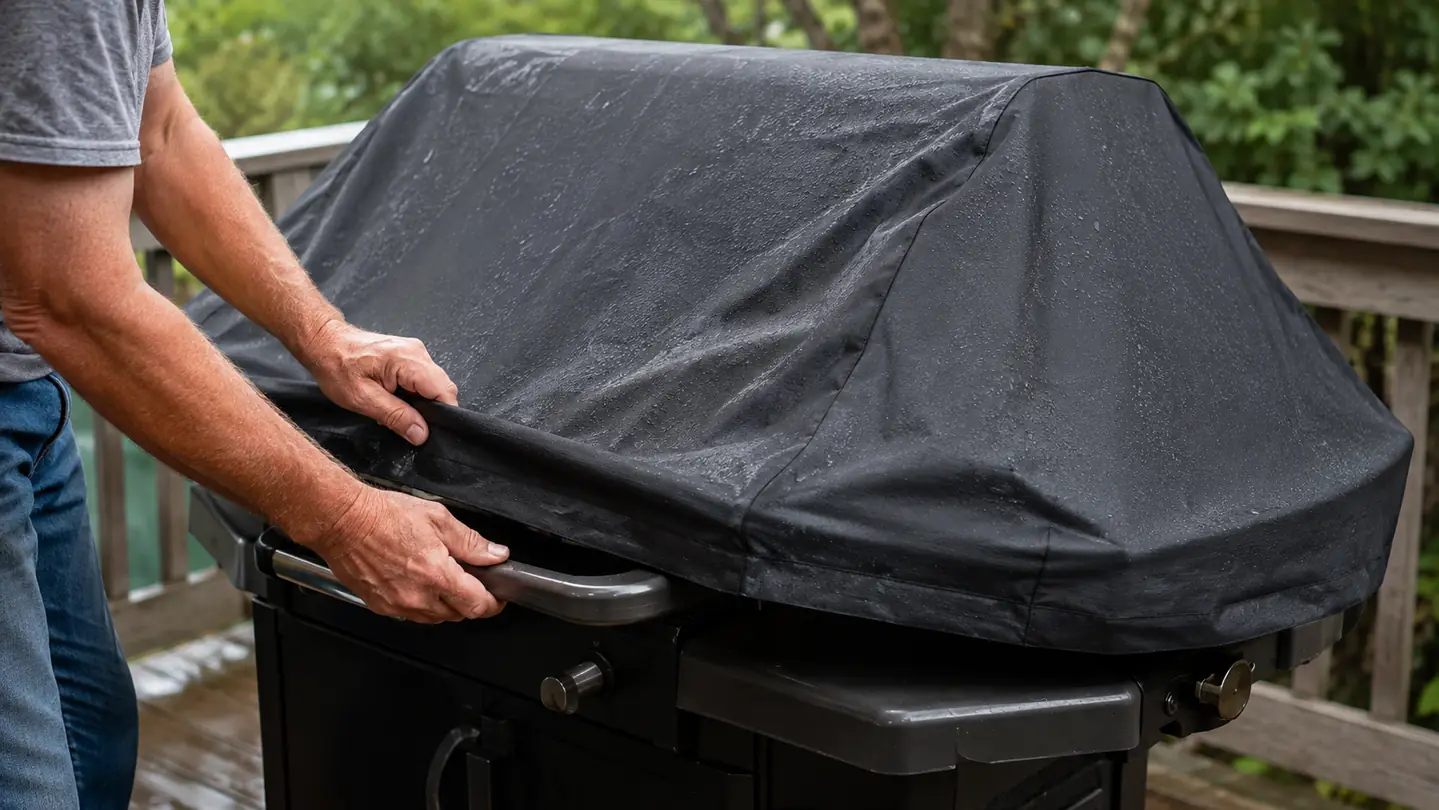
The first thing you notice is the weight of the fabric. The light covers I have owned over the years felt like stiff plastic grocery bags, and they moved in the wind like flags. This Simple Houseware cover has real body to it. It does not ripple in a breeze, it does not crackle when you fold it, and when you spread it over the smoker it settles instead of floating. That weight matters. A cover that does not move does not chafe, and chafing is what starts most of the tears you see on a neighbor's cover by the second year.
The second thing is the way the seams are finished. On the light covers I have thrown away, the seams were single lines of thread that unraveled from the corners first. On this one the stitching is tight and the corners are reinforced. I turned the cover inside out when it arrived, ran a thumb along every seam, and found none of the loose threads and skipped stitches I was looking for. It is the kind of detail you can check in two minutes at the kitchen table, and most people never bother to look.
The third thing is the cut. The cover is deep enough that it clears the grill handles and settles around the body instead of stretching tight across the top. On my offset I have a few inches of slack under the fabric, which is what you want, because a cover forced to stretch over a tall lid or a big handle will tear at the corners by spring. If you run a gas grill with a tall lid, the same clearance applies. Better a touch too deep than a quarter inch too tight anywhere.
How It Wore Through the Winter
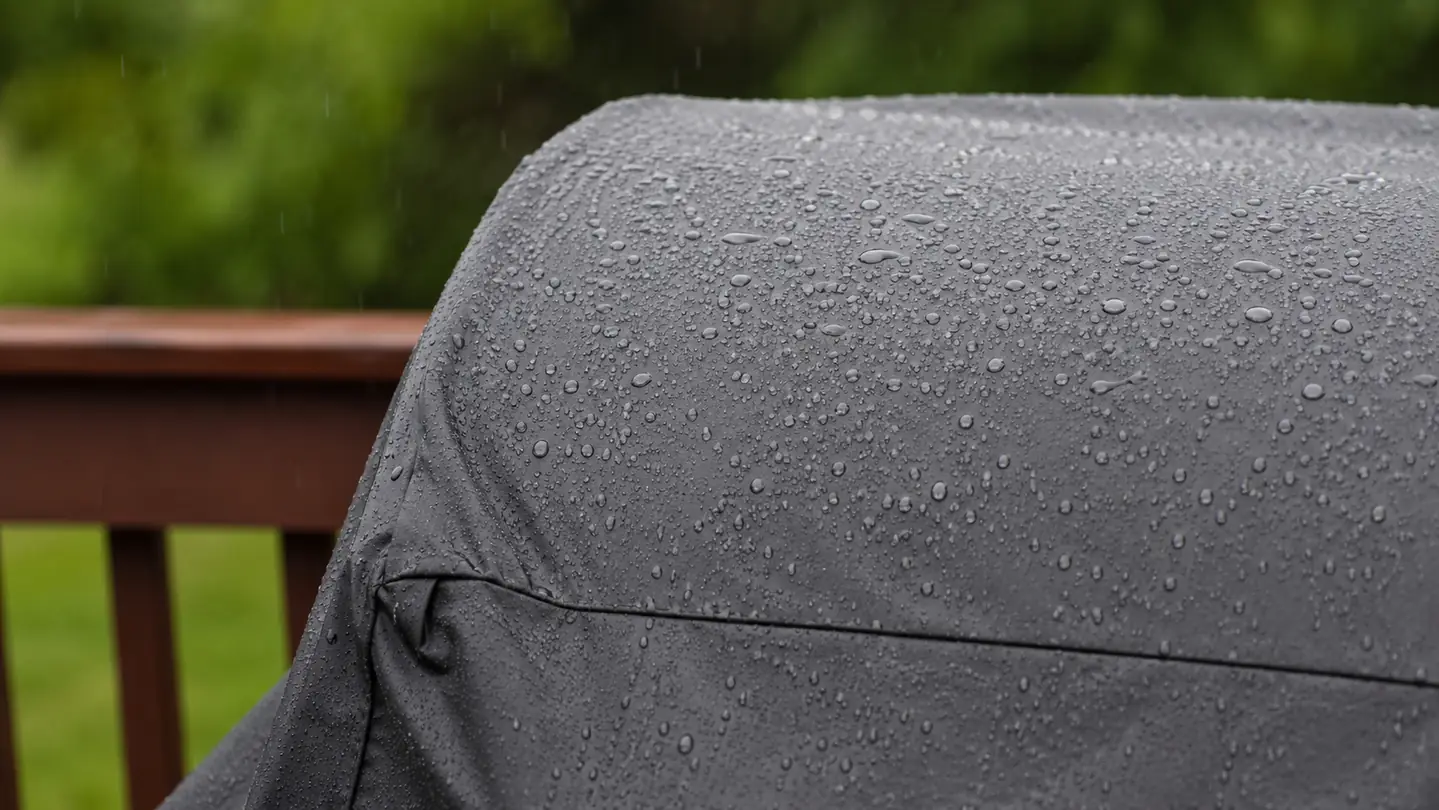
The telling moment came in November, in a storm that dropped about two inches of rain in four hours. I went out in the middle of it, the way someone who has been burned before does, and ran a hand underneath the cover on the damp side. Dry. The fabric was beading water the way a freshly waxed truck does, in drops that ran downhill and off the edge instead of soaking in. That is not magic. It is a decent coating applied properly, and it is the part of the waterproof claim that held up exactly as written.
The freeze came in January. We had a stretch of single digits and then an ice storm that left a crust on everything for three days. By then the cover was five months old, which is the age where the light covers I have owned started to stiffen and crack. This one went stiff in the cold, as any coated fabric will, but it did not crack and it did not split when I folded it back on a morning that never got above freezing to uncover the smoker for a cook.
The surprise was spring. By April the sun had done its usual work on the deck, and I expected the fabric to start dulling or stiffening the way every cover I have owned eventually does. It still sheds water. The seams are still intact. The corners have not pulled loose, and the fabric is not showing the thin spots that usually appear where a cover rubs something. Eight months is not a lifetime test, and I am not going to pretend otherwise, but it is long enough to show whether a cover is going to embarrass you in year one. This one will not.
Eight months of rain, ice, and mountain sun later, the Simple Houseware fabric still beads water. That was the claim I was most ready to catch failing, and it has not failed.
What Nobody Tells You Before You Buy a Grill Cover
Here is the honest part, and the reason this is not a perfect score. Waterproof does not mean waterproof forever. It means the coating sheds water until the sun, the folding, and the years wear it down, and that is true of the Simple Houseware cover and every other cover in this class. Nobody tells you that you are buying a consumable with a useful life of two to four seasons. The job of a good cover is not to last forever. It is to last longer than the grill it is protecting and to fail without taking the grill down with it.
The second thing the listing will not tell you is that fit is everything and the size name is only a rough guide. That 55-inch number describes the width of the grill the cover is built to fit, but manufacturers measure grills differently, and a 55-inch cover over a 52-inch grill fits differently than the same cover over a 56-inch grill. My advice is to measure the widest point of your grill across the top, add a few inches so the lid and knobs have clearance, and order that size. Do not trust the model number on the side of the grill, because that tells you nothing about its width.
The third thing is condensation, and it came within a whisker of costing this cover half a star. In March, on a warm damp stretch, I found moisture on the underside of the cover and a light film on the smoker lid even though no rain had fallen for days. The cover was doing its job, keeping rain out, but it was also holding humid air against a cold lid. The remedy was easy: in damp weather I leave the ends looser instead of cinching them down so air can move through. If you run a gas grill, the propane tank underneath changes the airflow, so you may need to fiddle with how tightly you secure it.
How does it compare with the alternatives? The realistic option below it is a lighter cover you replace every year or two, which is what I did for years and what most people do without thinking about the math. The realistic option above it costs more and adds little except a brand name, because the fabric in this class is mostly the same. What I noticed with this one is the seams and the weight, which is where the honest differences live. On a gas grill you would see the same thing, because a cover does not care what fuel the grill burns. It cares about wind, sun, rain, and how long the stitching holds.
The last thing worth knowing is that a cover like this asks for about ten minutes of upkeep a year. In the spring I hose it off on the lawn, let it dry completely in the sun, and fold it loosely for the summer so the creases do not set. That is it. Covers fail early when they are folded wet, stored in a shed, and left to mildew. I have lost more covers to that mistake than to any storm, and I do not plan to lose this one the same way.
What I Would Change
If I could change one thing, it would be the way the size is named. Calling it a 55-inch cover sounds precise, but the grill it fits depends on how a manufacturer measures width, and a person who does not read the fine print will order the wrong one. I would put a straightforward sizing chart right in the title.
On gas grills specifically, the other difference I can point you to honestly is the grease factor. My smoker does not leave the same film on a cover that a gas grill does over a season of burgers. If you run propane, expect the inside to pick up a fine greasy haze that can hold grime. That is not a fault of this cover; every cover on a gas grill does it. It just means you will want to give the inside a wipe down in the spring, which the listing does not mention.
The Pros and Cons
What I Liked
- Fabric is heavier than any cover I have used before, so it does not flap in the wind
- Seams and reinforced corners have not split in eight months of weather
- Water still beads on the surface after a full winter of rain and ice
- Deep cut clears the lid and handles with room to spare
- Feels like it will outlast the grill it is covering
Where It Falls Short
- Waterproof means water resistant after enough sun exposure; this is a consumable, not a lifetime purchase
- Condensation can form underneath in warm damp weather if the ends are cinched tight
- The 55-inch size name is only a rough guide; you must measure your grill
- Heavier fabric is more to fold and store when the grill goes away
Who This Is For
This cover is for the person who leaves the grill out all year and is tired of replacing covers every other spring. If you cook on a propane grill that measures somewhere in the 50-inch range across the top, this is the size class you want, and the weight is right if your grill sits on an exposed deck the way mine does. It is also for the person who has already learned that a flimsy cover is worse than no cover, because a flimsy cover holds water against the grill and rusts the very thing it is supposed to protect.
Who Should Skip It
Skip it if your grill lives under a covered porch or goes into the garage for the winter, because you are paying for weather protection you do not need. Skip it if your grill is small, a 22-inch kettle or a compact two-burner model, because a cover cut for a 55-inch grill will billow around a small one no matter how good the fabric is. And be honest with yourself: if you replace gear before it wears out, buy the lightest cover you can find, because this one will still be sitting in the shed long after you have moved on to the next grill.
The Bottom Line
So, would I buy it again? Yes, and I do not say that about most covers. After eight months it has not cracked, the seams have not split, the corners have not pulled loose, and it still sheds water the way it did in October. I expected the waterproof claim to be the first thing to fail, and it has been the last thing standing. If your grill fits the size, this Simple Houseware cover is the rare purchase that explains itself the first time you take it out of the box.
Measure your grill, then order the right size
If your gas grill is in the 50-inch range and you are tired of replacing covers every couple of years, this is the one to start with. Check the current price and the fit notes on the Amazon page before you order.
Amazon Check Today's Price on Amazon →