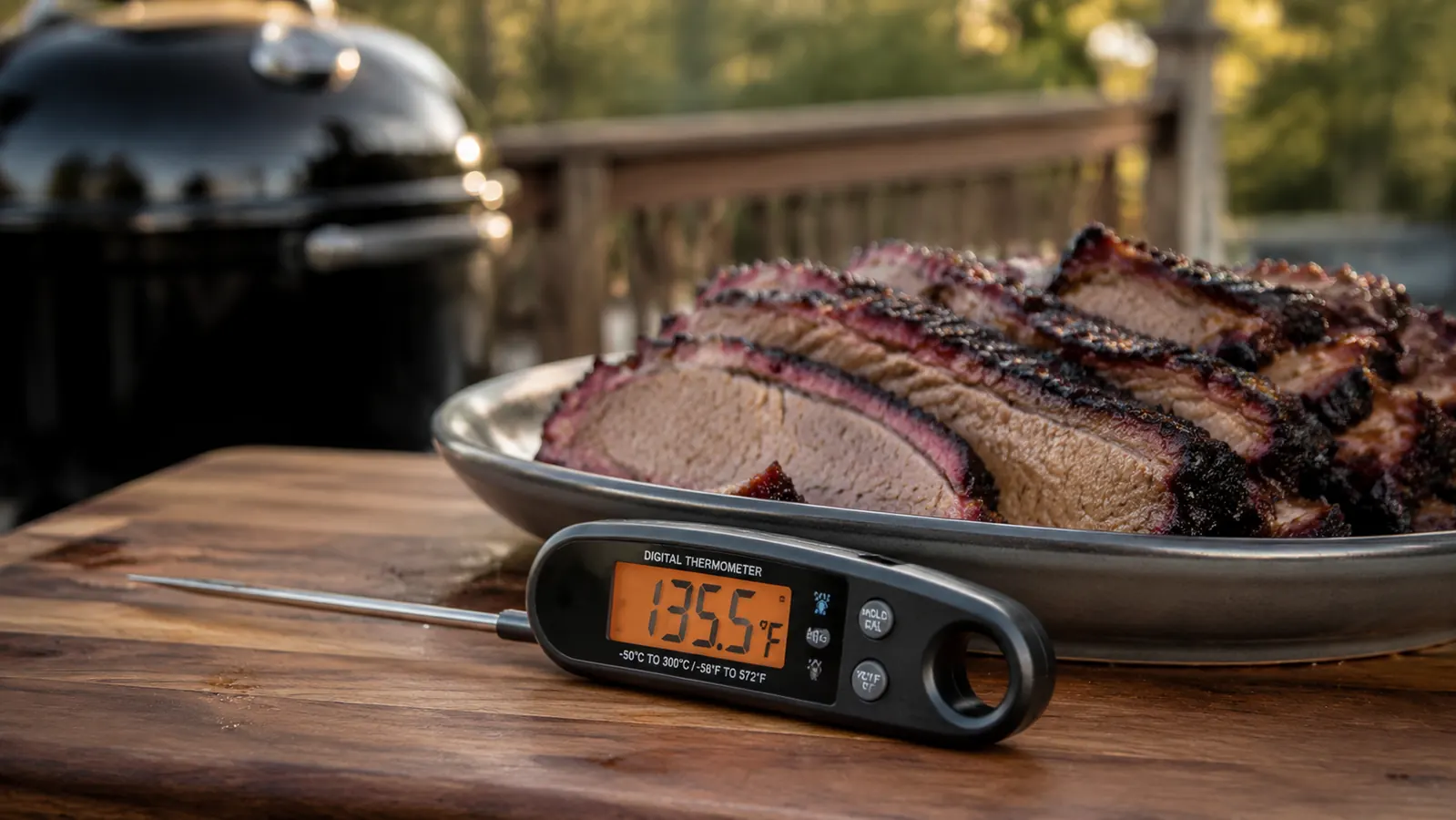
I bought the TempPro TempSwift in early May of 2024, a few days before the first brisket of the season. My old dial thermometer had stopped being useful, and I had already gone through two cheap digital probes, one that read about ten degrees low no matter where I put it and one that gave up after a rainstorm. My offset smoker runs uneven, hot near the firebox and cooler on the far side, so I trust the grate temperature less than I trust my hands. What I needed was a thermometer that gave me a reliable number fast, before I opened the lid and dumped out all the heat.
Two seasons later, that same TempPro still sits in my apron pocket for almost every Sunday cook. It has been dropped, knocked off the counter, splashed with marinade, and left out on the deck overnight once. The display is still easy to read on a bright afternoon, and the probe still slides into a cold chicken breast without dragging. It has not turned me into a better pitmaster on its own, but it has taken away the cheapest excuse I had, which was not knowing what was actually happening inside the meat.
The Quick Verdict
8.7/10 after roughly sixty cooks across two seasons. The TempPro TempSwift reads fast, stayed accurate, and has held up to more abuse than I expected. It is not a leave-in alarm thermometer, so for overnight smokes I still use a separate probe, but for the moment of truth it has earned its apron pocket.
Amazon Check Today's Price →The probe that ended my poke and guess cooks
If you are tired of slicing into a brisket just to see if it is done, this is the thermometer I grabbed every Sunday for two seasons. See what today's price looks like on Amazon before your next cook.
Amazon Check Today's Price on Amazon →How I've Used It
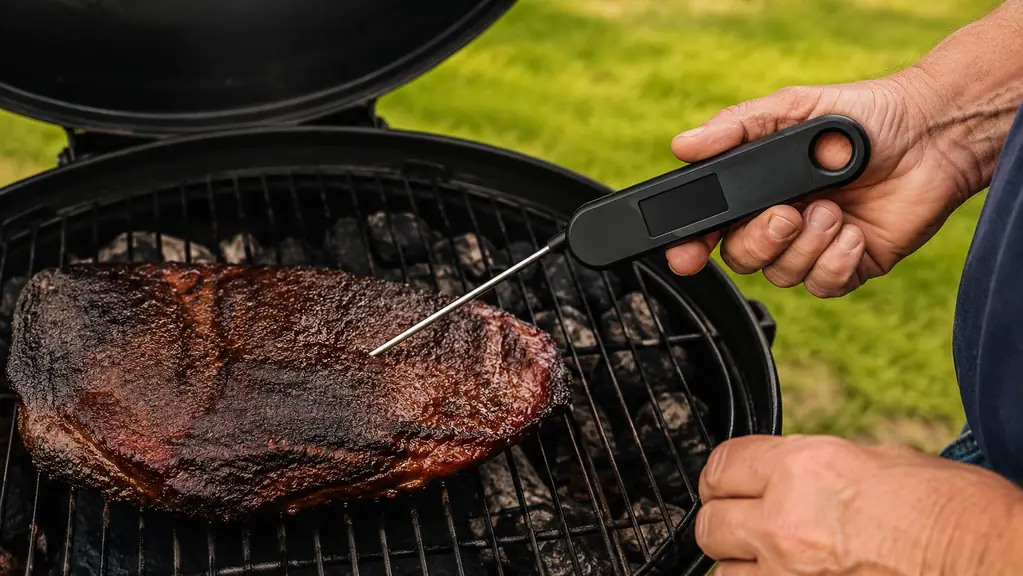
On most Sundays in north Georgia, I cook for six to ten people. From spring through Halloween, the charcoal kettle handles chicken, steaks, and pork shoulders, and the offset smoker gets the long cooks, usually brisket and sometimes a rack of ribs. The TempPro sits on the side shelf or in my apron pocket for the whole cook. I do not leave it in the meat. I check, close the lid, and wait. Without a fast thermometer, every time I opened the lid to poke a roast I lost a chunk of heat and added twenty or thirty minutes to the cook.
The way I use it also changes with the cooker. On the kettle, chicken thighs finish at different times, so I check the thickest thigh and then check two or three more before I take the whole batch off. On the offset with a brisket, I probe the flat, probe the point, and probe the seam between the two. Last October I had a brisket where the flat read 178 while the point read 195. If I had checked only the point, I would have wrapped that whole brisket nearly an hour early, and the flat would have been further overcooked by the time the point came around.
I also use it for pork shoulders, for a Thanksgiving turkey, and for thick ribeyes that I no longer cook by feel. It has replaced a thirty year habit of slicing into meat to see if it was done. I do not miss the juice running out onto the board. On a good Sunday, the only time I cut into a piece of meat before it rests is because I want to taste it, not because I need to check it.
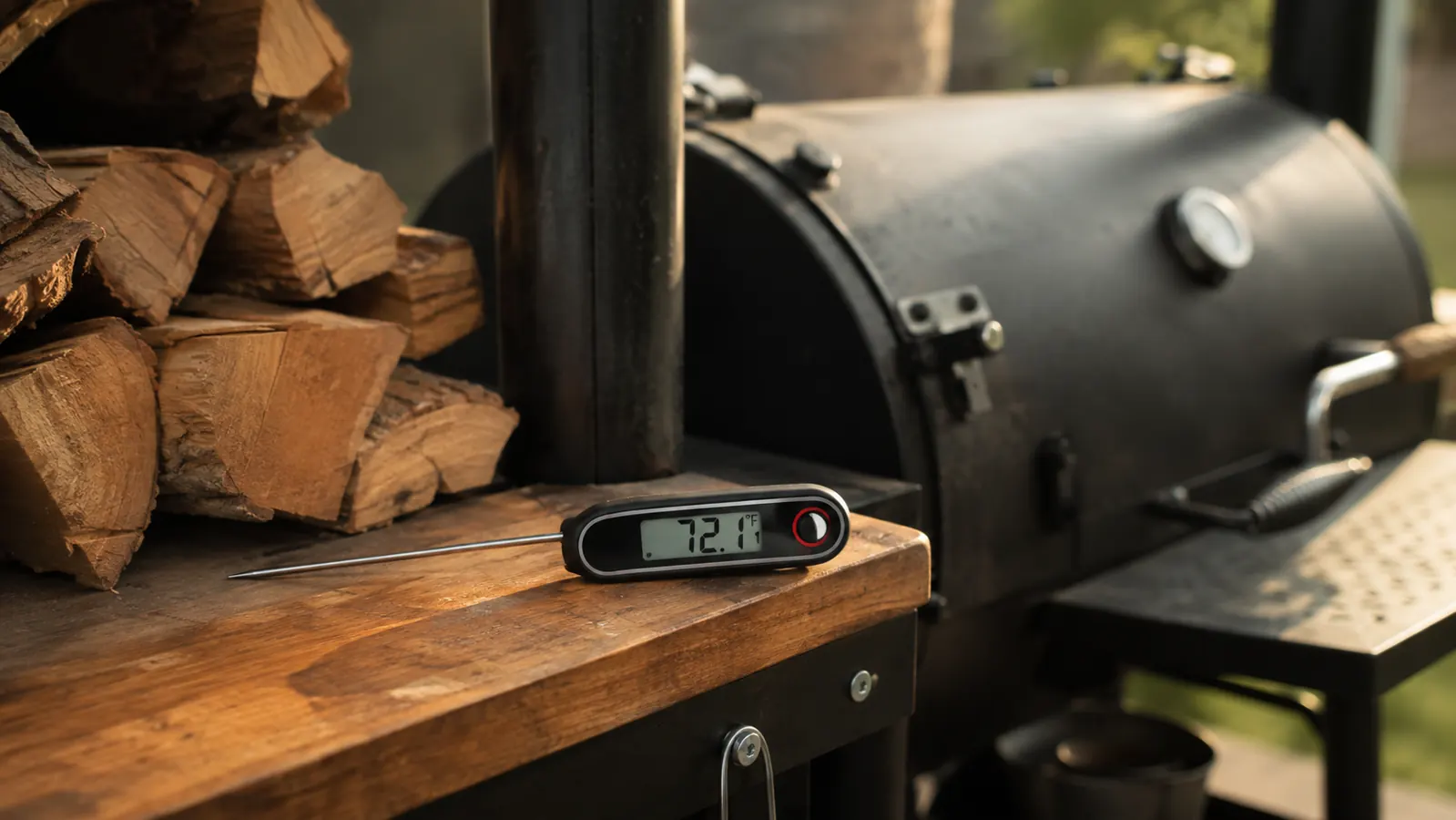
One more thing I have learned: the probe works best when I keep it away from the side shelf where heat collects. On my offset, the metal shelf near the firebox can be fifty degrees hotter than the meat, and if I rest the thermometer there, the handle and the probe get warm. I now keep it in my apron or on a small wooden board until I need it. That is not a flaw in the thermometer. It is the kind of habit that keeps a fast probe consistent for years.
What Two Seasons Did to It
After two full summers and two falls, I expected something to loosen, fade, or give up. The button has not gotten mushy, the display still reads clearly in direct sun, and the probe still feels tight where it enters the handle. Every couple of months I compare it with a leave-in thermometer I have used for years. I point both at the same piece of meat and wait. The two agree within a degree every single time. That kind of consistency matters more to me than a box bragging about a fraction of a degree.
Early in the first season I did a simple kitchen test: a pot of boiling water and a glass of ice water. The thermometer read 209 in the boiling pot and 32 in the ice water, both in line with what I expect at my elevation around Dahlonega. That was the first time I stopped worrying that I had bought another cheap toy.
The physical test has been rougher than any measurement. It has ridden in the door pocket of my pickup, fallen off a workbench, and spent a full afternoon in the heat while an offset fire burned three feet away. After the first season I cleaned it up and looked for wear. There was none. The probe still shines up like new.
During the second spring, the thermometer spent a few weeks in a drawer of my workbench while I replaced a section of deck. When I picked it up for the first cook after that, it turned on instantly and read the same as my reference probe. The battery had not leaked or died. I cannot promise every unit will do that, but mine did.
Where It Let Me Down
The honest limit is that this is a hand held thermometer, not a leave-in system. For a fourteen hour brisket, it cannot sit in the meat and wake me when the stall breaks. I tried to use it overnight by setting a timer on my phone and walking out to the smoker every two hours. It worked, but I lost most of a night of sleep, and I still had to trust that the spot I picked was the right one. A separate leave-in probe does that part of the job better.
My second complaint is smaller but real. After a cook with ribs and chicken, a thin film of grease builds up in the seam where the probe meets the handle. If I do not wipe it down before I put the thermometer in my pocket, the next time I grab it my fingers come away slick. It takes an extra minute to clean, and the seam still looks as tight as it did on day one, but this is not the kind of tool you can throw in a drawer and forget.
The third thing took me a while to learn. The thermometer reads so quickly that it can look wrong for the first half second. When I jammed the probe into a spot next to a bone, it would flash a temperature that had nothing to do with the rest of the meat. I now give every reading a full second, and if a number does not make sense I move the probe and try again. That is partly operator error, but a less patient cook could pull a pork shoulder too early.
The Cooks That Changed My Mind
One cook stands out. On a cool Saturday in late September, I had a fourteen pound brisket on the offset smoker. The flat had stalled at 158 for almost two hours, and I was fighting the urge to wrap it early just to keep the night moving. I probed the flat and got 172. I probed the point and got 187. I probed the seam and got 176. Those three numbers told me the flat had not caught up with the point, so I waited. About forty minutes later the flat read 203, and the whole brisket went into the cooler to rest. Slicing it that night, I did not need a single drop of sauce to hide a dry flat.
The second cook was Thanksgiving. For years I pulled the turkey when the breast hit 175 because that was the number my mother used and the pop up timer backed it up. That turkey was always dry. Last year I used the TempPro to pull the bird when the deepest part of the thigh read 167 and the breast read 161. After a proper rest, the white meat was juicy enough that Deb asked what I had done differently. That was the moment the thermometer earned its drawer space permanently.
The third cook was not a showpiece. It was a pack of bone in chicken thighs on the kettle with oak, and I let them run a little hotter than I used to because I could finally trust the number. They came off at 183 instead of 170, and the skin was crisp instead of rubbery. That is the real change with a fast thermometer. It moves the cook from watching the clock to reading the meat, and the meat is the only thing that knows when it is done.
The flat read 178 while the point read 195. If I had trusted only the point, I would have wrapped that brisket an hour early.
What I Liked
- Reads fast enough that I no longer dread opening the lid
- Stayed within a degree of my reference thermometer for two seasons
- Survived drops, sauce, heat, and a few weeks in a drawer
- Small enough to keep in an apron pocket without getting in the way
Where It Falls Short
- Not a leave-in thermometer, so overnight cooks still need a separate probe
- No alarm to tell you when the stall breaks
- Grease builds up in the seam and needs a regular wipe
- Requires a patient second before you trust the number
Who This Is For
If you are the kind of cook who owns a charcoal kettle or an offset smoker and cooks for family on weekends, and you have ever sliced into a pork loin just to see if it is done, this thermometer will earn its place in the first month. It is for people who cook often enough to want a real number and who are willing to probe two or three spots before they trust the result.
It is also for someone who has burned through the cheap two pack from the hardware store. The TempPro has lasted longer than both of the cheap digital probes I bought before it, and it reads faster. I cannot tell you if it is the most accurate thermometer ever made, but I can tell you it has agreed with my reference probe on every single check for two seasons. That is what I actually need on a Sunday.
If you already own a leave-in probe, this still earns its place. I use the leave-in probe overnight and the TempPro to confirm. They are not either-or tools. The leave-in tells me where the cook has been, and the instant-read tells me where it is right now. The instant-read is the one I trust when it is time to wrap or pull.
Who Should Skip It
If you only grill burgers and hot dogs on Memorial Day and the Fourth of July, you do not need this. You can cook those by feel and never lose any sleep. If you do not roast whole birds or smoke low and slow, a one second probe is a nice tool but not a necessity.
If you want a probe that lives in the meat overnight and wakes you when the stall breaks, this is not the product. You want a wireless leave-in thermometer with a base station or an app. The TempPro is for the moment of truth, when you need to know exactly where the flat is right now. It is not the night watchman.
If you expect one tool to do every job, skip it. The TempPro does not replace a remote thermometer, a trusted cooking timer, or the patience to let a brisket rest. It does one thing: reads the temperature instantly and accurately. For a cook who wants that one thing, it has been worth every minute of the last two seasons.
Let the thermometer tell you when the brisket is done
After two seasons and about sixty cooks, the TempPro is still the first tool I reach for before I light charcoal. If that is the kind of peace of mind you want for your Sunday cook, check what the current price is on Amazon and put one in your apron.
Amazon Check Today's Price on Amazon →