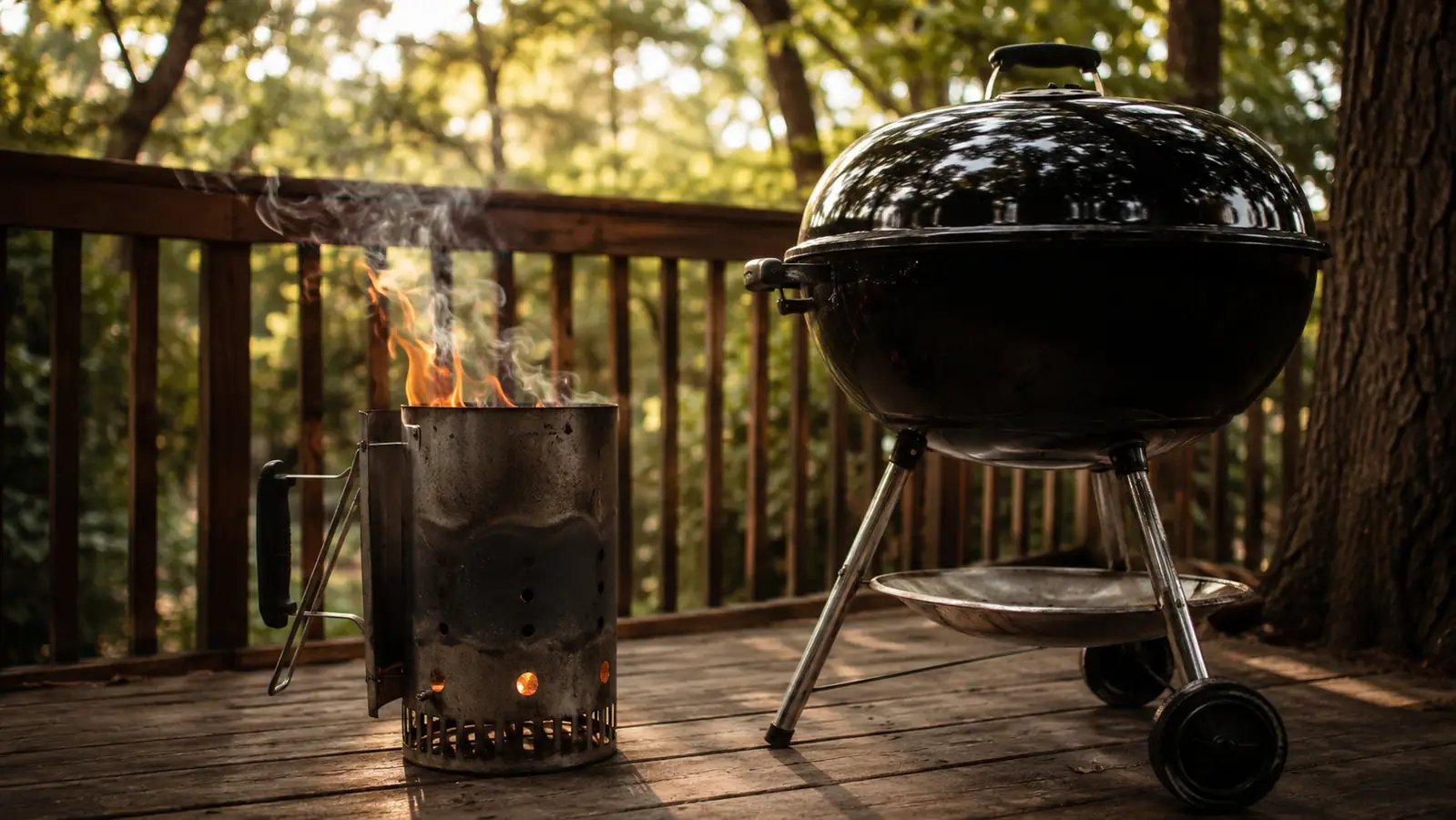
I bought my Weber chimney starter on a Tuesday afternoon in April, mostly out of spite. I had just finished scrubbing lighter fluid smell off a pork shoulder that tasted like it had been dipped in a gas can, and I told Deb I was done with the stuff. Three years later, that same chimney starter is sitting on the shelf next to my kettle, and it has lit more charcoal than I can count. This is the long-term review I looked for back then and never found, the one that tells you what a chimney looks like after a hundred cooks, not after the first shiny weekend.
If you are reading this, you probably already own a charcoal grill and you are tired of one of two things. Either you are still buying lighter fluid and wondering why your food tastes like a service station, or you have tried a cheap chimney from the hardware store and watched the handle come loose by the end of the season. I have been through both. Let me tell you what is different about a chimney that costs a little more, and what is not different at all.
The Quick Verdict
Three years of near weekly use and the handle is still tight, the light times have not slipped, and it still dumps a clean bed of coals. Minor rust along the bottom edge is the only real wear. For anyone who cooks on charcoal regularly, this is the chimney to buy.
Amazon Check Today's Price →Light charcoal in about 15 minutes with no lighter fluid taste
Three years of Sunday cooks and this is still the chimney I reach for every time. See today's price on Amazon and read what thousands of other owners say.
Amazon Check Today's Price on Amazon →How I've Used It
It gets used just about every Sunday from March through November, plus any Saturday when the weather is decent and Deb decides we are having people over. That works out to fifty or sixty cooks a year, more if I am doing a long smoke on the offset. On a typical Sunday I fill the chimney about two thirds full with lump charcoal, set it on the charcoal grate inside the kettle, and light a crumpled sheet of newspaper underneath it through the bottom vents.
I am not gentle with it. The chimney lives on the open shelf under the deck roof, so it gets rained on sideways and baked in July sun. It gets hauled between the kettle and the offset, knocked against the brick of the firebox, and dumped onto hot grates. When I need a second batch of coals for a long smoke, I fill it again while the first batch is already burning. That is the kind of treatment that shows you what a tool is made of.
Why I Switched Off Lighter Fluid
The short version is that lighter fluid works. It lights charcoal fast, and that is the whole argument for it. The trouble is not the lighting. Even when you wait for the flames to die down, the fluid soaks into the charcoal itself, and that smell comes back out in the first hour of the cook. I ran a pork shoulder on the offset once with fluid-lit coals, and the meat picked up a chemical note that no rub could cover. My wife noticed it before I did, and she is not the type to complain about smoke.
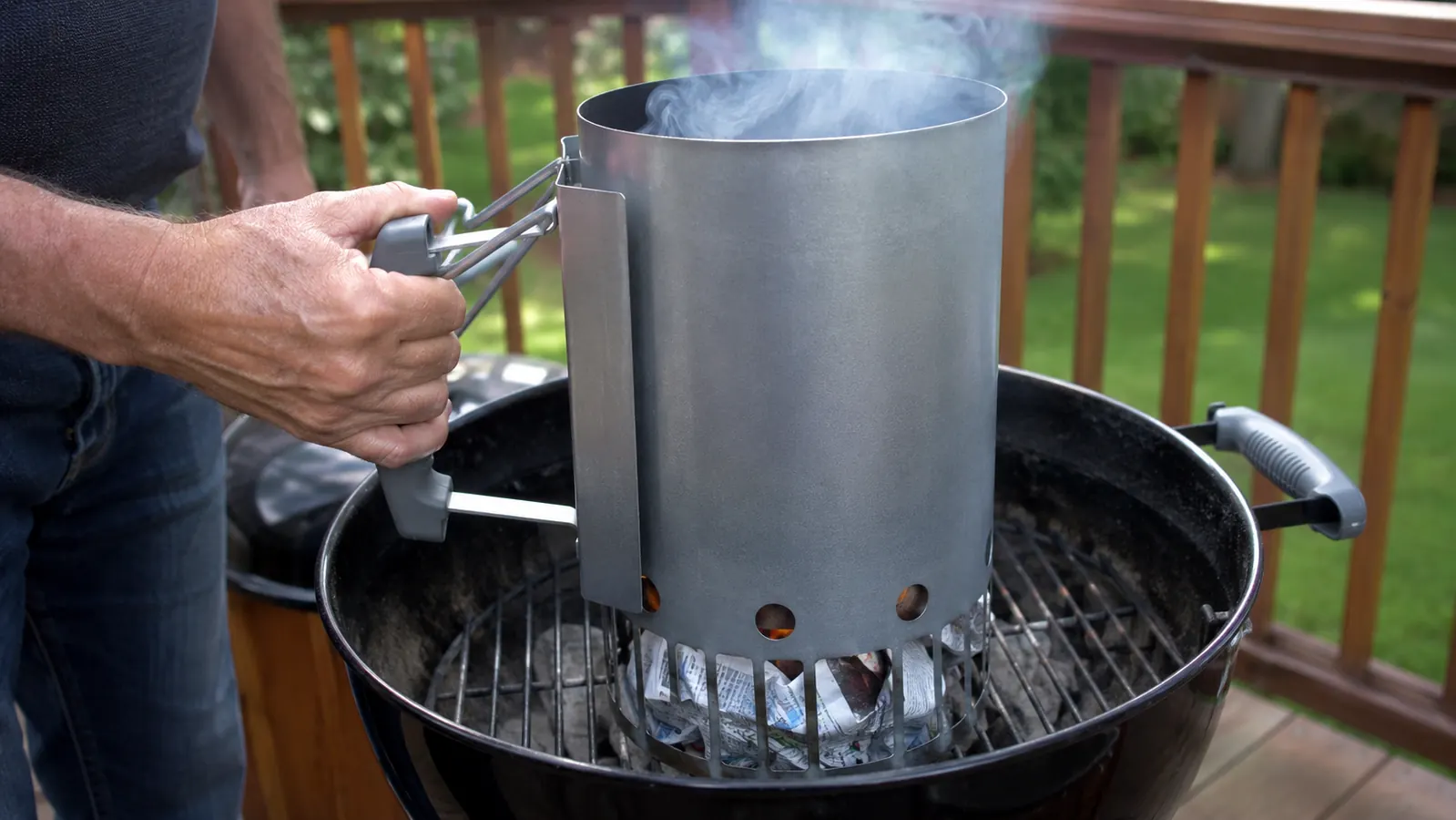
A chimney does the same job with nothing but newspaper and moving air. Fill the cylinder, light the paper underneath, and the draft pulls fresh air up through the coals. Fifteen to twenty minutes later you pour out coals that are gray and glowing, with no fluid and no smell beyond clean wood smoke. That is the whole difference, and it is a bigger one than it sounds. Lighter fluid never gave me a coal bed that clean, and it never will.
Before the Weber, I went through two cheap chimneys from the hardware store in about eighteen months. The first one had a handle that wiggled from day one and finally let go entirely one Sunday morning, which is how I ended up wearing half a batch of hot coals down my shin. The second one rusted through at the bottom seam after one wet winter. They were cheaper individually, but together they bought me less than two seasons, and then I had to start over.
That is the math the marketing photos skip. A chimney starter looks like a simple metal cylinder, and it is. There is not much engineering to it, because the principles were worked out long ago. What separates one that lasts from one that does not is the gauge of the steel, how the handle is attached, and how the bottom grate is fixed in place. You cannot see those things in a product photo. You find out over two seasons, which is exactly what the cheap ones did not survive.
What Three Years Did to This One
The handle is the part people ask me about, because it is the first thing to go on a cheap chimney. Mine is still tight. The grip has not melted, and the connection has not loosened, even though I regularly hang the whole chimney by the handle while the coals inside are still working. I cannot tell you how the handle is fastened, only that it has not moved in three years.
The body has picked up dents from getting knocked against the kettle and the offset, but it still sits flat, and the bottom grate that actually holds the coals is straight. That bottom grate was the part I expected to fail first, because it takes the weight of a full load of hot charcoal. Three years in, it is intact and the holes have not stretched out. The finish has faded, and there is surface rust along the bottom edge where the metal sits in ash, but it has not eaten through anywhere.
What has not changed at all is the light time. Fresh lump charcoal, one sheet of newspaper, and I am pouring gray coals into the kettle in about fifteen minutes. On a windy day it is faster. On a damp day it is slower, closer to twenty. It has never failed to light, which is more than I can say for the chimney it replaced. The Weber is the reason this is the only chimney starter I have bought in three years.
Most of my cooking is lump charcoal, so that is what this chimney has seen. On the occasions when I have used briquettes, for a low and slow cook where I wanted steady heat, the chimney handled them the same way. Briquettes took a few minutes longer to catch, but the chimney lit them without drama and without any chemical smell. I do not have a strong opinion in the lump versus briquette argument, but I can tell you the chimney does not care which one you feed it.
How I Load It and Light It
If a chimney has ever frustrated you, the problem is usually air, not the chimney. Fill it full, because a full column of charcoal draws better than a half load. Do not pack the bottom with a giant wad of newspaper. One loosely crumpled sheet, maybe two, is plenty. A thick wad smothers the flame and makes the whole thing smoke instead of burn.
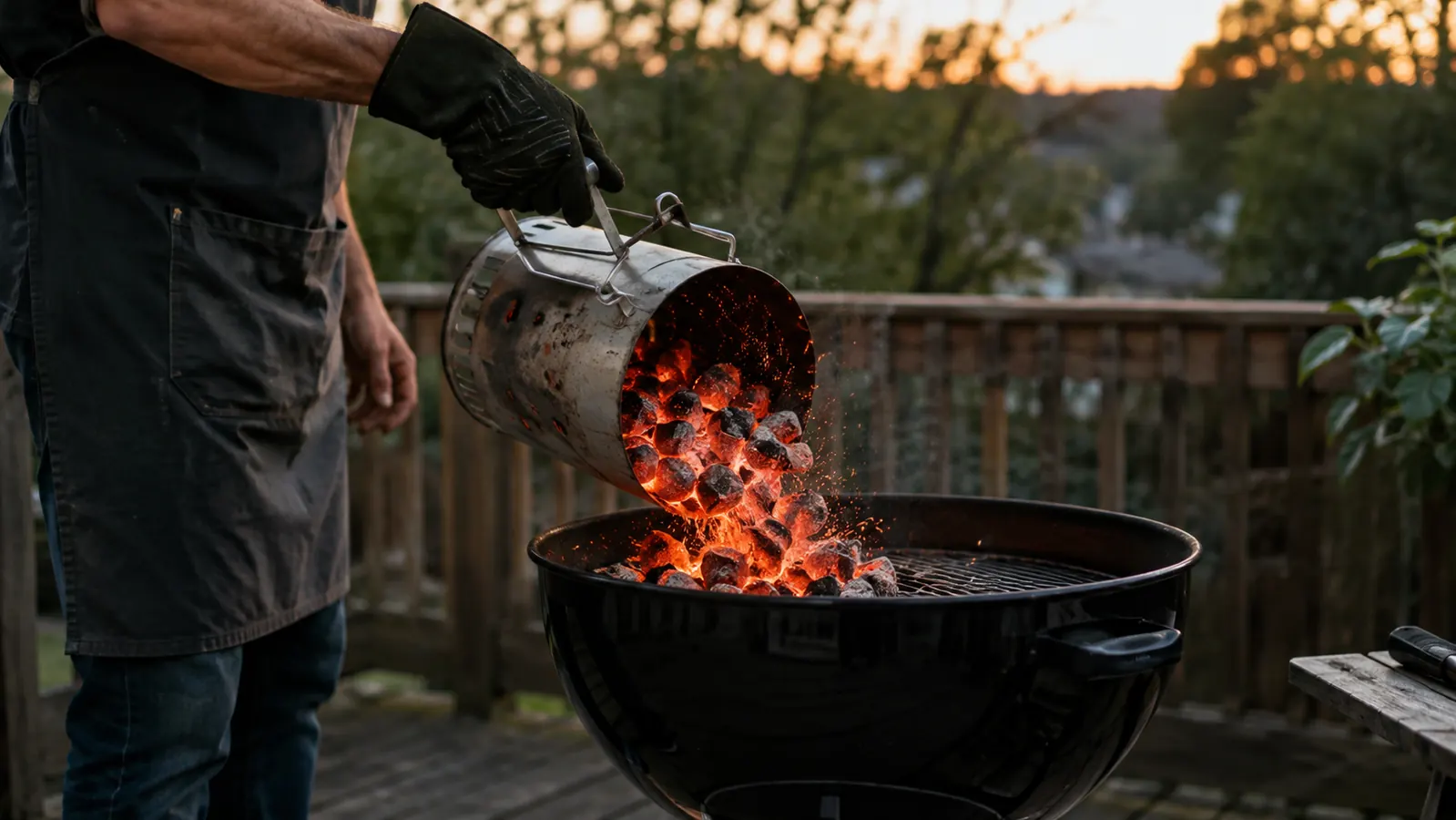
Set the chimney on the charcoal grate inside the kettle, or on any flat heatproof surface, then light the paper through the vents with a long lighter or a match. Leave it alone until the coals on top are edged with gray ash. That is your signal. When you dump, wear a glove on the hand that tips the chimney, keep the other hand high on the handle, and pour into the center of the pile so the hot coals spread evenly instead of banking up on one side.
One habit I have gotten into is lighting a second batch while the first batch is already cooking. A single chimney load gives me a full kettle of coals with a little left over, but the offset smoker wants more. I fill the chimney again when the meat goes on, set it on a spare grate, and by the time I need to add fuel the second batch is ready. That is the kind of convenience the cheap chimney never gave me, because by then the handle would already be loose.
What I Would Change or Watch For
The honest list of complaints is short, but it is real. A chimney is not fast. Fifteen to twenty minutes is the dependable window, and you have to plan around it, especially on a weeknight when you are hungry and the coals are not. If you want fire in three minutes, a propane torch or an electric starter does that job. I keep a chimney because I like what it does to the flavor, not because it is the quickest way to a flame.
The other things to watch are minor. The bottom edge will rust if you leave the chimney sitting in its own ash, so I knock the ash out every couple of uses and hang the chimney on a hook instead of leaving it on the ground. The outside has dulled and dented, and that is cosmetic. And if you cook for a crowd on a big offset, plan on lighting two loads, because one chimney of this size is matched to a kettle, not a firebox.
The Bottom Line After Three Years
If this chimney vanished tomorrow, it would be one of the handful of tools I replaced before the next weekend. Not because it is fancy. It does one thing and does it without drama, and it has not let me down on a single cook in three years. In a hobby full of gadgets that promise more than they deliver, that counts for a lot.
The honest score has warts. The finish dulled, the bottom edge carries rust, and it will never light coals as fast as a torch. But every Sunday when I pour a chimney of clean gray coals into the kettle and catch nothing but the smell of wood smoke, I am glad I gave up lighter fluid. The Weber chimney starter is the tool that made that possible, and three years in, I still would not trade it.
What I Liked
- Lights lump charcoal in about 15 minutes with nothing but newspaper, and no lighter fluid taste in the food
- Handle and bottom grate have held up through three years of weekly outdoor use and rough handling
- Reliable draft lights every time, even on damp days, as long as the chimney is full
- Simple steel construction with no moving parts to wear out or replace
- One load fills a standard kettle, and a second batch is ready before the first burns down
Where It Falls Short
- Fifteen to twenty minutes to light means you have to plan ahead, so it is not an instant fire tool
- The finish dulls and the bottom edge picks up surface rust after a couple of seasons outdoors
- One load is not enough for a big offset firebox, so expect to light two for long smokes
- You still need a glove to dump hot coals, and the metal holds heat for a good while
- Costs more up front than a no-name hardware store chimney
The handle is the first thing to go on a cheap chimney. Mine is still tight after three years of weekly cooks.
Who This Is For
Buy this if you own a charcoal kettle or a drum smoker and you cook on it more than a few times a month. It is the rare upgrade that pays for itself in the first season, because you stop buying lighter fluid and you stop throwing away meat that tastes like it. It suits people who would rather wait fifteen minutes for a clean coal bed than rush a cook and taste the difference. If that sounds like you, a Weber chimney starter is the one I would buy again.
The kind of cook I mean is the one who already has the routine down. You know how your grill runs, you know how much charcoal you need for a rack of ribs, and you just want the lighting step to be boring and reliable. This chimney is that. It is the least interesting part of my setup, and that is the highest compliment I can pay it.
Who Should Skip It
Skip it if you grill four or five times a year and the chimney will sit in a shed for months between uses. A cheaper one will probably do, though you will likely replace it eventually. Skip it too if you have moved to a pellet grill or a gas unit, because you do not need a coal bed at all. And if waiting fifteen minutes for coals sounds like an insult, an electric starter or a torch is the honest answer. This is a tool for people who cook low and slow on purpose, not people looking for an easy button.
The chimney I still reach for after three years of Sunday cooks
If you cook on charcoal more than a few times a month, this is the one upgrade that earns its place on the shelf. Check today's price on Amazon.
Amazon Check Today's Price on Amazon →