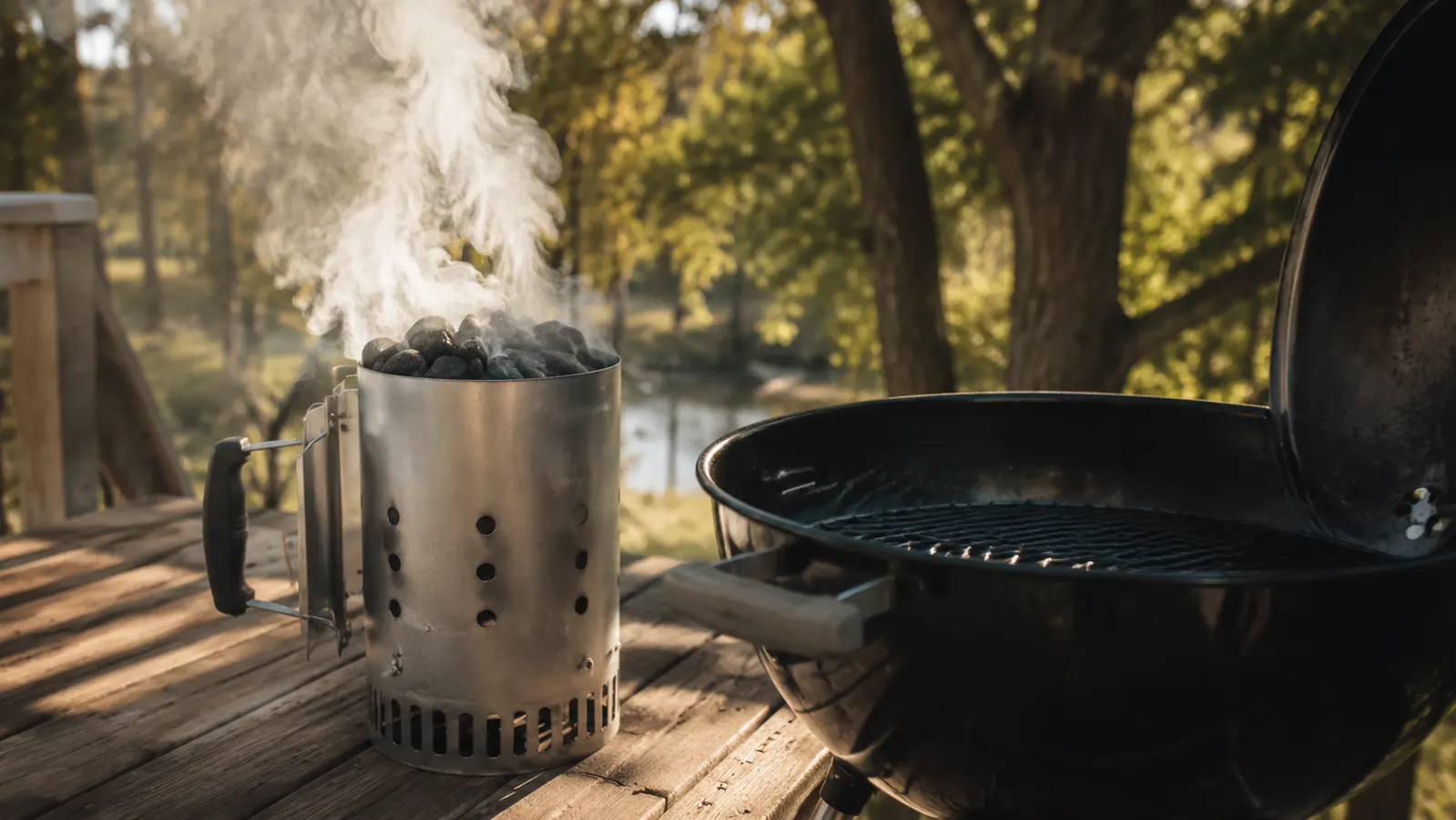
For years I lit charcoal the same way my grandfather did: squirt fluid, wait a minute, toss a match. The fire roared, the grill fizzed, and if I was patient enough, most of the chemical smell burned away before the chicken ever hit the grate. I never gave it much thought, because that was how every cookout I went to worked. Then I bought a Weber Rapidfire Chimney Starter on a whim. The handle on my old grill basket fell apart, I needed to hit a free shipping threshold, and the chimney starter was stuck to the top of the page. That impulse buy changed my charcoal routine more than any single tool since I traded briquettes for lump. I still have a can of lighter fluid in the garage. It has not been opened in two summers.
The short answer is that a chimney starter wins for regular charcoal cooks, and it wins by a clearer margin than I expected. It produces even coals, leaves no chemical taste on the meat, and turns the fussiest ten minutes of grilling into a hands-off wait. That does not make lighter fluid worthless. If you light a small batch of coals twice a month, or you grill somewhere without newspaper or a flat surface, fluid gets you hot faster and takes up almost no space. It has two honest advantages that I will get to in a minute. But for the standard Sunday cook, the chimney starter does exactly one job and does it right: every coal is ready at the same time, and none of them smell like a service station.
| Weber Chimney Starter | Lighter Fluid | |
|---|---|---|
| Time until coals are ready | 20 to 25 minutes from match to ashed, even coals | Flames in seconds, coals in 10 to 15 minutes when you judge the amount right |
| Evenness of the fire | Every coal glows at the same level from bottom to top | Hot center, cooler edges, with a few stragglers unless you arrange the pile |
| Risk of fuel taste | None, the only fuel is paper and air | Real if you rush the coals or pour on too much |
| Learning curve | Needs newspaper or a starter cube and a few tries | Squirt, wait, light, no extra gear |
| Storage and portability | Tall metal cylinder needs a dry spot near the grill | Small can tucks into a cabinet, cooler, or camp box |
| Long term value | One chimney holds up for years and runs on free newspaper | Bottles run out and the cost repeats every summer |
| Safety around hot coals | Fire stays inside the steel cylinder | Pooled fluid can flare if you pour it onto an existing fire |
What the Side by Side Showed
Instead of trusting old memories and backyard folklore, I ran a plain comparison over three consecutive weekends on the same 22 inch charcoal kettle. I used the same bag of lump charcoal for every cook so the fuel would not change the results. On the fluid day I lit the coals with a standard can from the grocery store. On the chimney day I used the Weber Rapidfire with a sheet of newspaper wadded underneath. I did not change the rub, the chicken, or the way I banked the coals once they were ready. The only real variable was the hour before the food went on.
I kept a small notebook on the deck rail and wrote down three things: how many minutes passed before the coals were uniformly ashed and ready, how much tending that window required, and whether the finished meat tasted like the wood and rub I had used or like something from a hardware store. I also paid attention to the less measurable part of the process because a damp evening in north Georgia will punish a lighting method quickly. The chimney needed one extra crumpled sheet of paper and about two extra minutes. The fluid lit fast but fought a breeze that kept pushing the flame away from the pile.
Where Weber Wins
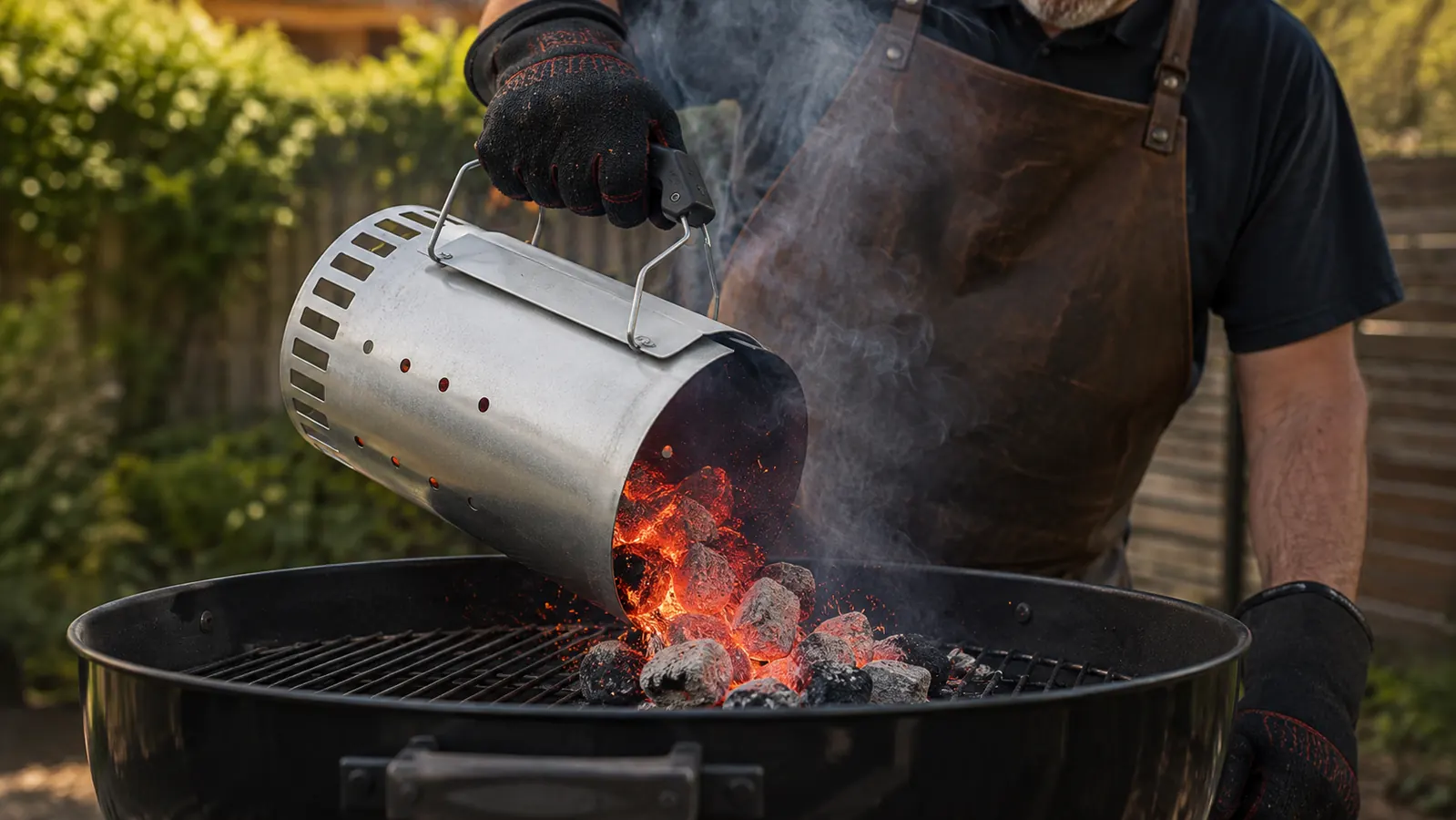
Twenty minutes before the coals go on, I stuff a sheet of newspaper under the Weber chimney, fill the top with lump, and light the paper through the vent slots near the bottom. The first few minutes are quiet. Smoke curls out, the steel warms, and then the draft catches and the whole chimney turns into a small forge. At around the twenty minute mark the coals on top are ashed over, which tells me the ones underneath have been burning even longer. When I pour them into the kettle, they spread across the grate in a single even layer. There is no volcano. There is no ring of dead briquettes waiting to catch later. That even bed holds temperature for a long cook, and it is the main reason I reach for the chimney first.
Why does evenness matter so much? Because an uneven coal bed is what makes a kettle grill hard to use. You end up with a patch of screaming heat in the middle and a cooler zone at the edges, so the chicken burns before it cooks through and the vegetables sit in a pool of fat. With the Weber chimney, I do not have to sort coals with tongs while the lid is off and heat is escaping. I pour the load where I want it, set the dampers, and walk away. For smoking a small pork butt on the offset or searing steaks directly over lump, that steady foundation is worth more than any fancy grate I have tested.
The flavor side is where the chimney puts the argument to rest. Lighter fluid can work if you are careful, but the cost of being careless shows up on the plate. I have eaten my share of chicken that tasted faintly like the can because I did not wait long enough, and once you notice that taste you cannot unnotice it. The chimney has no chemical layer to wait out. Newspaper smoke is gone within a minute, and after that the charcoal is clean. When I lay a hickory split over the coals, what I smell is wood smoke, not a hardware store. Weber did not invent this design, but they executed it well enough that mine has held up for years without bending, cracking, or shedding its handle.
One thing I did not expect was how much less time I spend hovering. With fluid, I stood over the kettle with a match and a can, adding more when the edges lagged and waiting for the smell to blow away. With the chimney, I walk back inside, pour a coffee, and come out when the smoke turns wispy. That sounds trivial, but it changes the whole rhythm of hosting. I am more relaxed before dinner, and the food turns out better because I am not rushing the fire.
Where Lighter Fluid Wins
Now I have to be honest about the places where lighter fluid is the better tool, because this article is no good if it hides the other side. The first is raw speed. Soaked briquettes catch fire in seconds, and a modest pile can be ready in the time it takes to slice an onion and open a beer. A chimney always needs a few minutes for the draft to build, and you cannot skip that phase without ending up with half lit coals and a mouthful of smoke. Lighter fluid also asks nothing of you in the learning department. Squirt, wait a few seconds, light. That is the entire skill. Anyone at a tailgate can do it with a paper plate and a book of matches.
Portability is the second real advantage. At home, a chimney starter is not much trouble, but it still needs a dry shelf and a place to cool after you pour the coals. A one quart fluid can sits in the spare tire well of a truck or the pocket of a camp bag and does not leak if the cap is on. If I am cooking at someone else's cabin or at a parking lot before a football game, I do not want to carry an extra metal cylinder with ash dust in the bottom. The fluid can also does small batches better. When I only need enough charcoal for two burgers, firing up the full Rapidfire feels like heating a banquet oven for one slice of bread. A loose pile of eight pieces of lump with a little fluid is the proportionate tool for that job.
I also need to mention that fluid can get you into trouble if you get careless. The worst grill fire I ever walked into at a neighbor's house came from someone pouring fluid on coals that were already lit. The chimney cannot flare up that way because the fire is always inside steel until you are ready to pour. That single safety difference is enough for me to choose the chimney when there will be kids around the grill.
Let the Paper Do the Work
The Weber Rapidfire is the charcoal tool I recommend before any fancy grate, thermometer, or grill light. It does the boring prep work so the actual cooking is simple. You load the coal, light the paper, and walk away for twenty minutes. When you come back, the fire is even, clean, and ready. If you are tired of fluid taste and patchy coals, today is a good day to make the switch. Check the current price and read what thousands of other home cooks have to say after a season with one.
Amazon Check Today's Price on Amazon →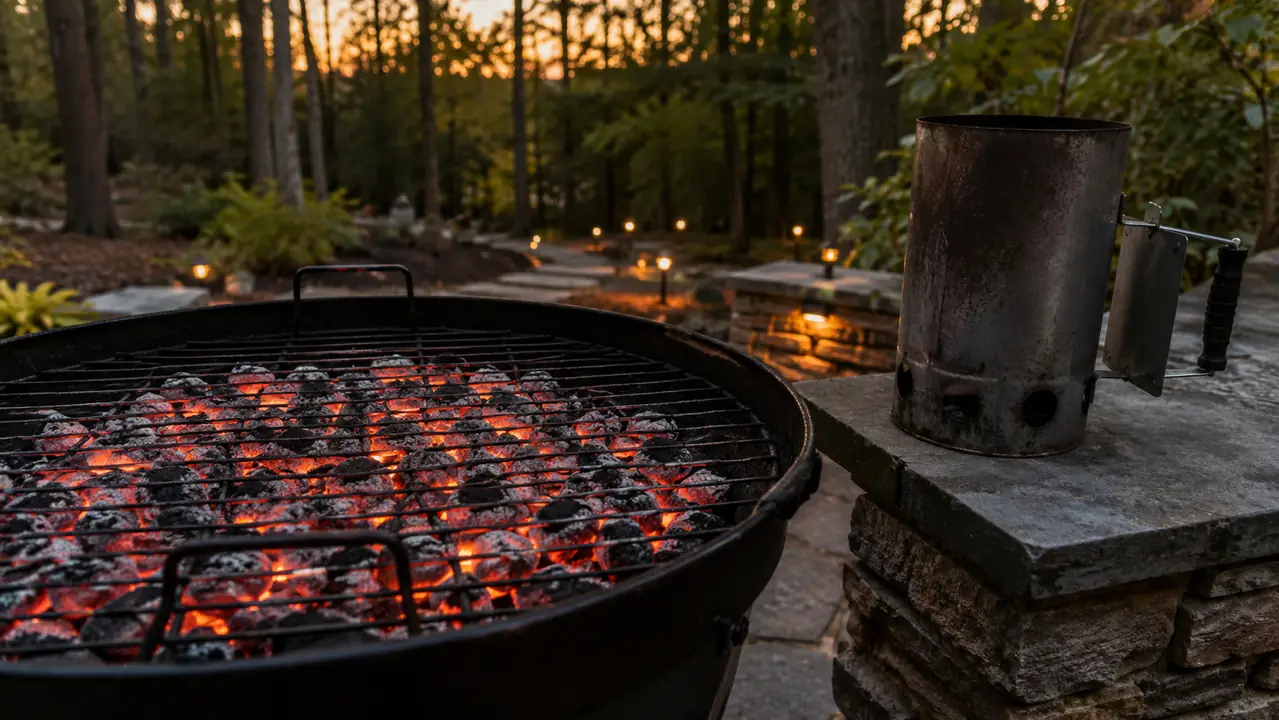
Who Should Buy Which
Here is a simple way to decide. If you cook over charcoal more than twice a month, or you feed more than two people on a regular basis, buy a chimney starter. You do not need the most expensive model on the shelf. You need a steel cylinder that sits steadily on the charcoal grate and holds a full load of lump, and the Rapidfire is the version I trust. Keep it dry and it will start coals for years. In my own setup it hangs from a nail under the deck overhang, close enough that I do not have to hunt for it. When Sunday rolls around, the chimney is already where I need it.
If you grill only a handful of times each summer, or if most of your charcoal cooking happens at somebody else's fire, keep a can of fluid and do not apologize. It is faster, simpler, and easier to pack. The tradeoff is evenness and flavor risk, and for a casual cook that may not matter enough to justify one more piece of equipment. You can also use both, which is what I do. The chimney handles the main cook, and a small can stays in the garage for the moments when I need eight coals for two burgers and do not want a production.
The real point is that neither method makes you a bad cook. They are just two ways to get carbon hot enough to cook dinner. Pick the one that fits how you actually live. If you open your kettle most weekends and you feed a table, the chimney will pay for itself in fewer ruined batches and cleaner flavor within a season.
The Bottom Line
After three full Sundays of side by side cooks, my answer has not changed: the Weber chimney starter is the better everyday tool for most charcoal cooks. It is not flawless. It takes longer, it needs dry storage, and you have to learn how to light the paper right. But those small costs buy an even fire and a clean flavor that no can of fluid can give you. On the rare night when speed matters more than quality, the fluid can still earns its place. That is not a contradiction. It is just using the right tool for the size of the job.
Ask yourself what kind of cook you are. If you enjoy the ritual of building a fire and do not mind waiting twenty minutes for a better coal bed, the chimney will fit you. If you just want dinner and you are already thinking about the dishes, no one should judge you for using the can. The method is not the meal.
One Tool for Every Charcoal Sunday
Bottom line: if Sunday dinner is the reason you own a charcoal grill, the Weber Rapidfire belongs on that deck. It turns the least pleasant part of grilling into a simple twenty minute wait and leaves your meat tasting like wood and charcoal, not like a can. Click through to see today's price and check the owner reviews before you decide.
Amazon Check Today's Price on Amazon →