
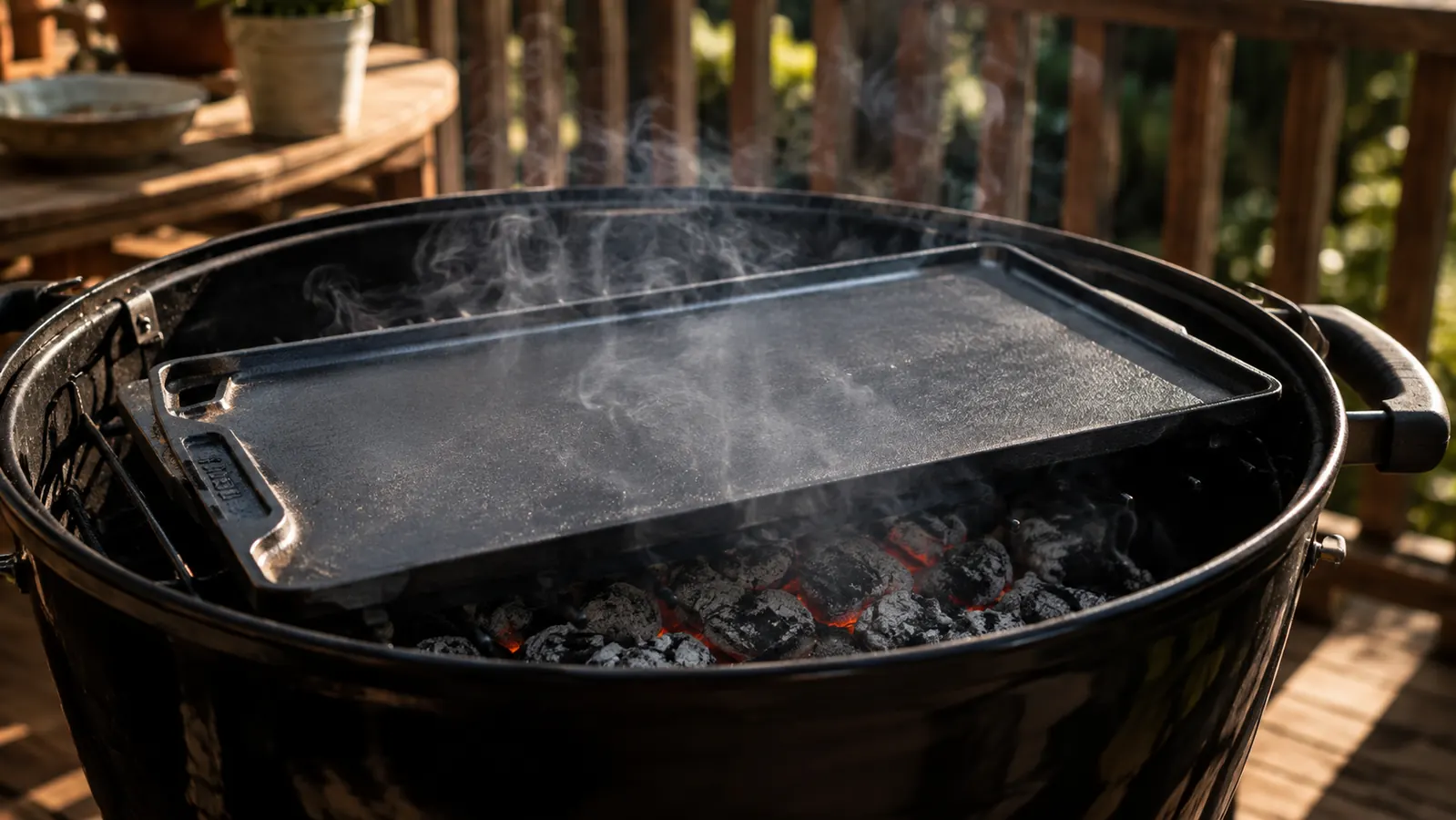
Eleven months ago I set a Utheer 25-by-16 cast iron griddle on the cooking grate of my old charcoal kettle and told my wife Deb we were done cooking bacon in a skillet on the stove. She gave me the sort of look a woman gives a husband who has just bought another grill part. One year later, after close to fifty Sunday breakfasts and more smash burgers than I counted, that same griddle has a permanent place on my deck. It is also the first accessory I would replace tomorrow if it ever cracked.
I bought it with my own money last spring because I was tired of juggling three pans across two stove burners on weekend mornings. I did not expect a single slab of iron to change how I cook an entire meal outside. The griddle has not replaced my kettle or my offset smoker. It added a third way to cook, a flat heat surface that turns the grill into a cooktop. Along the way it taught me real lessons about seasoning, rust, and heat control that no product page mentions.
The Quick Verdict
One of the most useful charcoal grill upgrades I have tried, so long as you treat cast iron like cast iron.
Amazon Check Today's Price →The Griddle I Reached For Every Weekend
After a year of bacon, eggs, and smash burgers cooked over lump charcoal, this Utheer griddle is still flat, still holds heat, and still earns its place on my cooking grate. If that sounds like the cook you want, check today's price on Amazon and read the recent buyer reviews before you decide.
Amazon Check Today's Price on Amazon →How I've Used It
The most honest answer is that this griddle gets used almost every weekend in two different jobs. Saturday breakfast is bacon, eggs, pancakes, and sometimes sausages, all cooked over a half chimney of lump charcoal that I rake to one side of the kettle. That gives me a hot zone for bacon and a cooler zone where eggs finish gently. Sunday dinner is usually smash burgers when the family shows up, because the flat surface takes four patties at a time and sears every one with the same kind of crust.
On a typical weekend I start the fire about twenty minutes before I want to cook. While the coals are lighting, I set out the bacon, the eggs, and a spray bottle of canola oil. The griddle goes on the grate after the coals have stopped throwing flames. I let it preheat for a full ten minutes with the lid closed, and only then do I lay down the first strips of bacon. If I rush the preheat and put food on a cold surface, the first batch sticks and the outside cooks before the middle reaches temperature.
The griddle has also become my main cooking surface for meats that need a quick sear before going into the offset smoker. I heat it over a hot fire, sear chuck roasts and pork steaks, and then move the meat to the smoker to finish low and slow. That sounds like an odd use for a breakfast griddle, but the wide flat iron creates a better crust than the round bars of the grill grate, and it keeps the hot, greasy part of the cook outside.
Seasoning and the First Few Cooks
The product ships with a factory preseasoning, and it is decent, but thin. On my first cook I warmed the griddle over a small pile of lump coal for about ten minutes, let it smoke a little, and then wiped on two light coats of vegetable oil with a cotton cloth. Each coat smoked off before I added the next. The first batch of bacon behaved, and eggs cooked after the bacon slid around with very little butter. If you skip this step and go straight to the bacon, you will likely get patches of sticking food until the surface builds up a proper seasoning of its own.
The mistake that taught me the most came in week two. I seared four burgers, then left a spoonful of sweet barbecue sauce sitting on the hot surface while we ate inside. The vinegar and sugar ate through a patch of seasoning by the time I came back. The next morning that patch was a light rust. I fixed it with a stainless steel scrubber and three rounds of oil, letting each round smoke off over low coals. The spot had disappeared by the following weekend, and the lesson stuck: clean the griddle while it is still warm and never let a wet towel sit on the seasoned surface.
By month two the factory coating was gone, replaced by a seasoning layer that built up every time I cooked. It did not look uniform at first. There were darker spots where burgers had been and lighter patches where I had scrubbed too hard. I stopped trying to make it look new and started judging it the way I judge a skillet, by how well an egg releases and how clean a burger crust comes up. The more I cooked on it, the better that seasoning got, and by midsummer the surface felt like glass under a spatula.
Cleanup and the Rust Question
The worst thing that happened to this griddle was my fault. During a hot stretch last August, I cooked a late Sunday dinner, let the grill cool, and then left the griddle on the grate because I planned to carry it to the shed in the morning. A quick thunderstorm blew through that night. By Monday afternoon the surface was dotted with rust, heaviest in the center where rain had pooled. I scraped the loose rust, scrubbed the whole slab with a stainless steel pad, and gave it two rounds of oil over a low fire. Then I cooked a pound of bacon to finish the repair.
Daily cleanup is easier than people expect, once you set up a system. When the cook is done and the griddle is still warm, I scrape it clean with the long spatula, pour a little hot water over the surface, and scrub with coarse salt and a folded paper towel. The salt lifts stuck bits without cutting seasoning. Then I dry the griddle over low heat and wipe a thin coat of oil across the top. The whole routine takes about five minutes, and it has kept rust away ever since.
I also learned what not to do. No dishwasher cycle, no long soak in soapy water, and no leaving it wet between uses. A stiff wire brush will remove seasoning faster than it removes food. Even paper towels can leave lint if the surface is rough, so I wipe with a clean cotton rag before the last oiling. None of this is hard, but it is steady work, and that is the honest cost of a cast iron tool that still cooks well after a year.
One more thing I wish someone had told me is that maintenance includes the bottom side. Grease drips over the edge and bakes onto the underside, and that carbon builds up if I ignore it. About once a month I flip the griddle over while it is still warm and scrape the underside with the spatula. A clean bottom heats more evenly and keeps stray drips from smoking. I also check the grate bars where the griddle rests, because ash and drips can collect under the handles and harden.
I rusted the griddle through my own neglect and had it cooking like new by the next weekend. That is the cast iron trade: it punishes laziness quickly, then forgives a quick repair.
Smash Burgers and the Weekend Dinner System
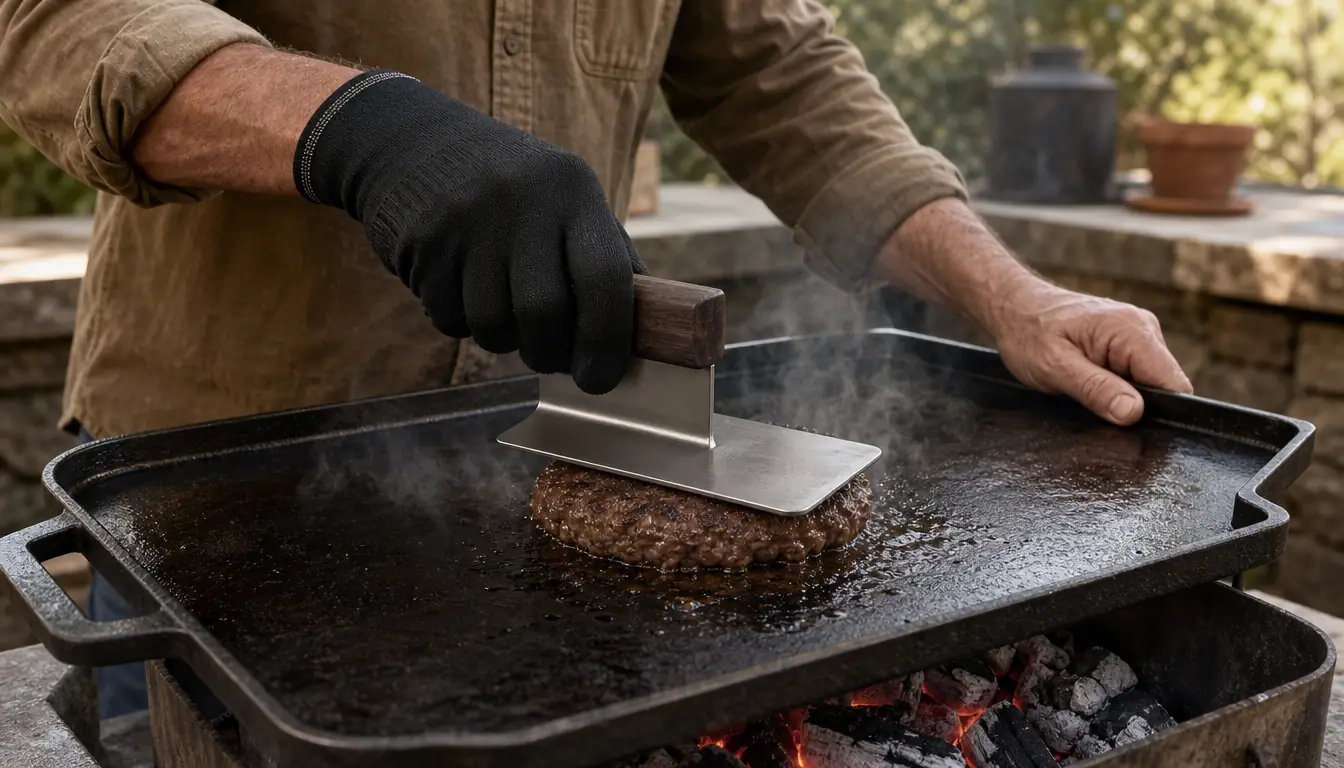
The reason I reach for this griddle on Sundays is consistency. A cast iron slab sitting over charcoal holds enough heat that adding four cold balls of ground chuck does not drop the surface temperature the way a thin steel insert would. I let the griddle sit over a half chimney of lit coals for ten minutes, lower the lid, and wait until the surface is shimmering. Then I drop four loosely packed balls of ground chuck, each about two and a half ounces, and press them flat with a masonry trowel wrapped in foil.
Each patty stays down for roughly ninety seconds before I flip it. The crust is deep brown, the interior still pink, and the release is clean because the seasoning has had a year to bond with the iron. On a good Sunday I cook two pounds of chuck, which works out to two rounds of four patties plus a few singles. The first batch rests on the cooler edge of the griddle while the second batch cooks, and by the time the last burger comes off the surface is still flat and ready for eggs if anyone wants breakfast for dinner.
Between April and October I cooked sixty or seventy burgers on this griddle. Not once did the center bow up or the edges sag. That matters because I had a steel griddle insert years ago that warped after a hot fire, leaving a low spot where grease pooled and burgers steamed instead of searing. This piece still sits flat against the kettle grate, which tells me the iron was cast thick enough to handle a full chimney of lump charcoal on a regular basis.
I also use the griddle for peppers and onions, charred corn, and the occasional stack of pancakes between burger rounds. The key is to scrape the surface between batches and add a few drops of oil before the next food hits. Once you understand that rhythm, the griddle becomes the default answer to anything you used to cook in a skillet.

What I Would Change
No tool is perfect, and this one has two flaws that keep it from a perfect score. The first is weight. A 25-by-16 cast iron griddle is a heavy slab, and when it is loaded with bacon grease it takes two hands and a careful path to move it from the grill to a heat-safe counter. The end handles are serviceable with a thick glove or a folded towel, but they are not as comfortable as a regular skillet handle. I always set the griddle down on a flat surface before I scrape it rather than trying to hold it in one hand.
The second change would be a shallow grease lip on all four sides. The straight sides work fine on a calm day, but a sudden gust across my deck can push bacon fat over the edge and onto the coals. That causes a flare and leaves a greasy ash mess. A raised rim would turn the griddle from a very good tool into a nearly perfect one, and it would make the griddle easier to recommend to someone with a wind-exposed grill. Even with that quibble, I have not found another insert that cooks this well in a year of use.
What I Liked
- Big flat surface handles a full breakfast without juggling stove skillets
- Iron holds heat well enough to sear four smash burgers at once with a clean release
- Stayed flat through a year of high-heat cooks and a rainstorm rust episode
- Pre-seasoned enough to start cooking right away; seasoning settles in after a few cooks
Where It Falls Short
- Heavy slab is awkward to lift when loaded with grease
- Needs oiling and dry storage; leaving it out even once can bring rust
- Factory seasoning is thinner than the ad suggests
- Straight sides let wind push grease off the surface
Who This Is For
Buy this griddle if you already cook outdoors on a full-size charcoal grill and want one tool that handles breakfast and burgers without another pan in the sink. It suits a cook who does not mind five minutes of after-cook care, because cast iron only stays slick if you oil it and keep it dry. If you usually feed four to eight people and you like a hard sear on meat, this griddle will become part of your regular weekend routine faster than you expect. On a gas grill, the same care rules apply, but check the layout of your grates to make sure a flat rectangular surface sits level.
Who Should Skip It
Skip it if you want a leave-it-out tool or you cook on the grill less than a couple of times a month. Cast iron needs dry storage, and an idle griddle rusts faster than one you use weekly. This is also not the tool for someone who expects a truly nonstick surface from day one. The factory seasoning is a starting point, not a finish; your first few cooks are part of the setup. If that sounds like too much involvement, a stainless steel griddle insert is the easier choice, though you trade away the heat retention that makes cast iron so good at searing.
Six months from now I expect the same Utheer griddle will be sitting on my cooking grate, darker from use and still flat. That is not a prediction I make lightly, because I have retired plenty of grill accessories after a single season. Cast iron is a relationship, not an appliance. The griddle and I have settled into a routine: I keep it dry and oiled, and it keeps delivering bacon that crisps evenly and burgers that release without a fight. For a home cook who wants one more way to use the grill they already own, that is a trade I make every weekend.
One Iron Slab That Earned a Spot on My Deck
After a year of heavy weekend use, I still trust the Utheer griddle to handle the same breakfast and the same smash burgers this Sunday. If you are ready to move those cooks outside, check today's price on Amazon and read the recent reviews before you buy.
Amazon Check Today's Price on Amazon →