Last spring I finally added a smoker box to my old 22-inch kettle, and the Skyflame wood chip box is the one that stayed on my grate for the whole season. I am Marlin Cobb, a retired HVAC contractor who has cooked outdoors on the same back deck in Dahlonega, Georgia, for over twenty years. I spent most of those years telling myself that a kettle grill and a chimney of lump charcoal were all anyone needed. A pork shoulder on a kettle tastes great without help, but what I kept wanting was the quiet, steady smoke that a stick burner gives you. That is what sent me looking for a smoker box in the first place.
Before I settled on this one, I tried two cheaper options. The first was a thin tin box that rusted after the fourth cook. The second was the old foil packet method, which worked only if I stood over the grill and wrapped a new packet every time the smoke died. I bought the Skyflame model in early June because the steel looked thicker than the tin box and because the vent holes were on the sides instead of the top. That design promised to let the chips smolder without plugging. By the time the leaves turned in October, that box had cooked chicken halves, two small briskets, a rack of lamb, and enough pork shoulders to feed the usual Sunday crowd of six to ten people.
The Quick Verdict
A steel wood chip smoker box that does what cheap tins and foil packets promise. One load gives close to ninety minutes of clean, steady smoke and cleanup takes three minutes. Mine has a slight bow in the lid after a season, but it still works every time I reach for it.
Amazon Check Today's Price →Add real wood smoke to your next grill cook
I have used the Skyflame smoker box for an entire season of chicken and pork shoulder cooks. It sits on the grate above the coals and delivers clean smoke without constant attention. Check today's price to see if it fits the way you cook.
Amazon Check Today's Price on Amazon →How I've Used It
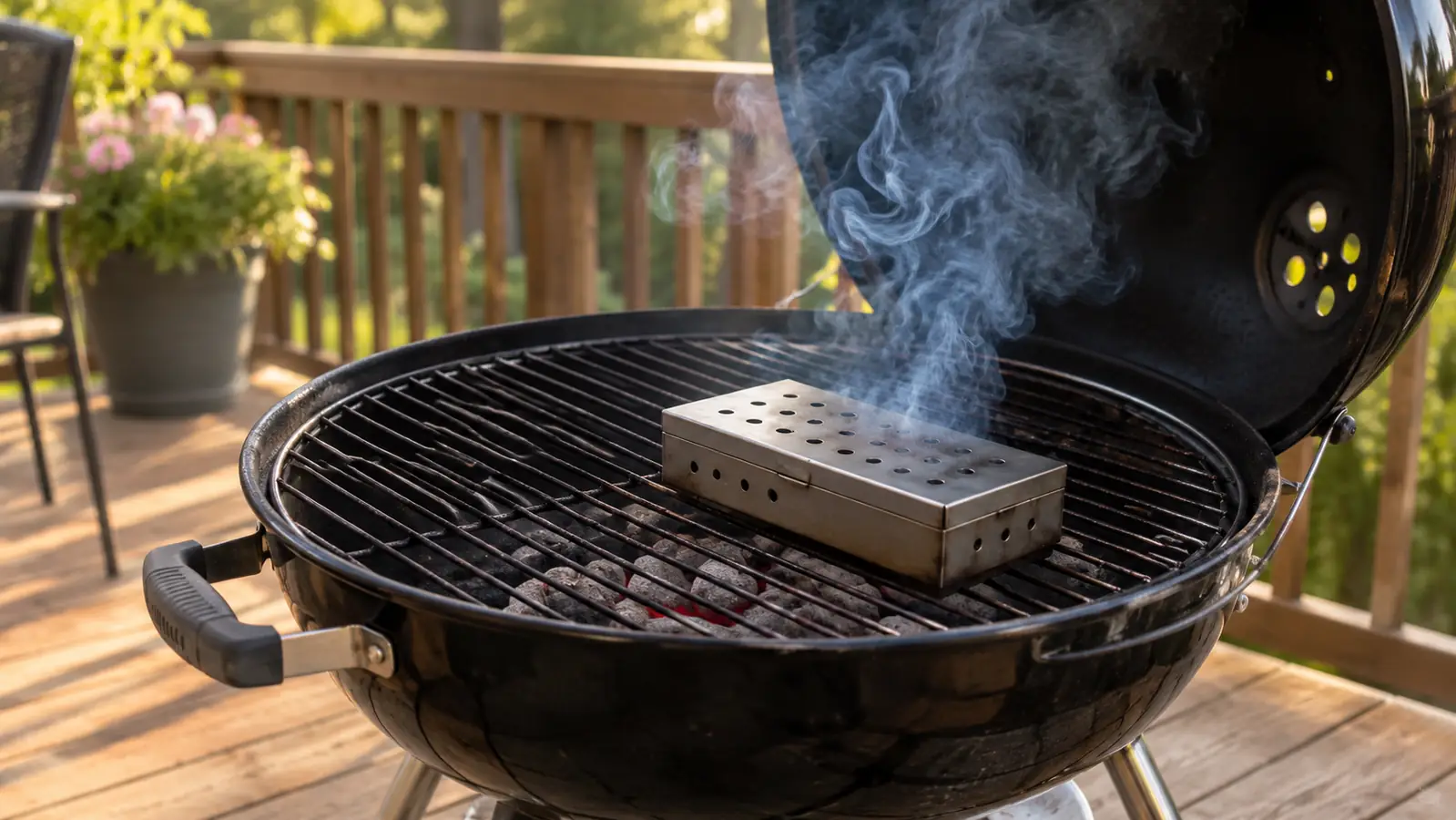
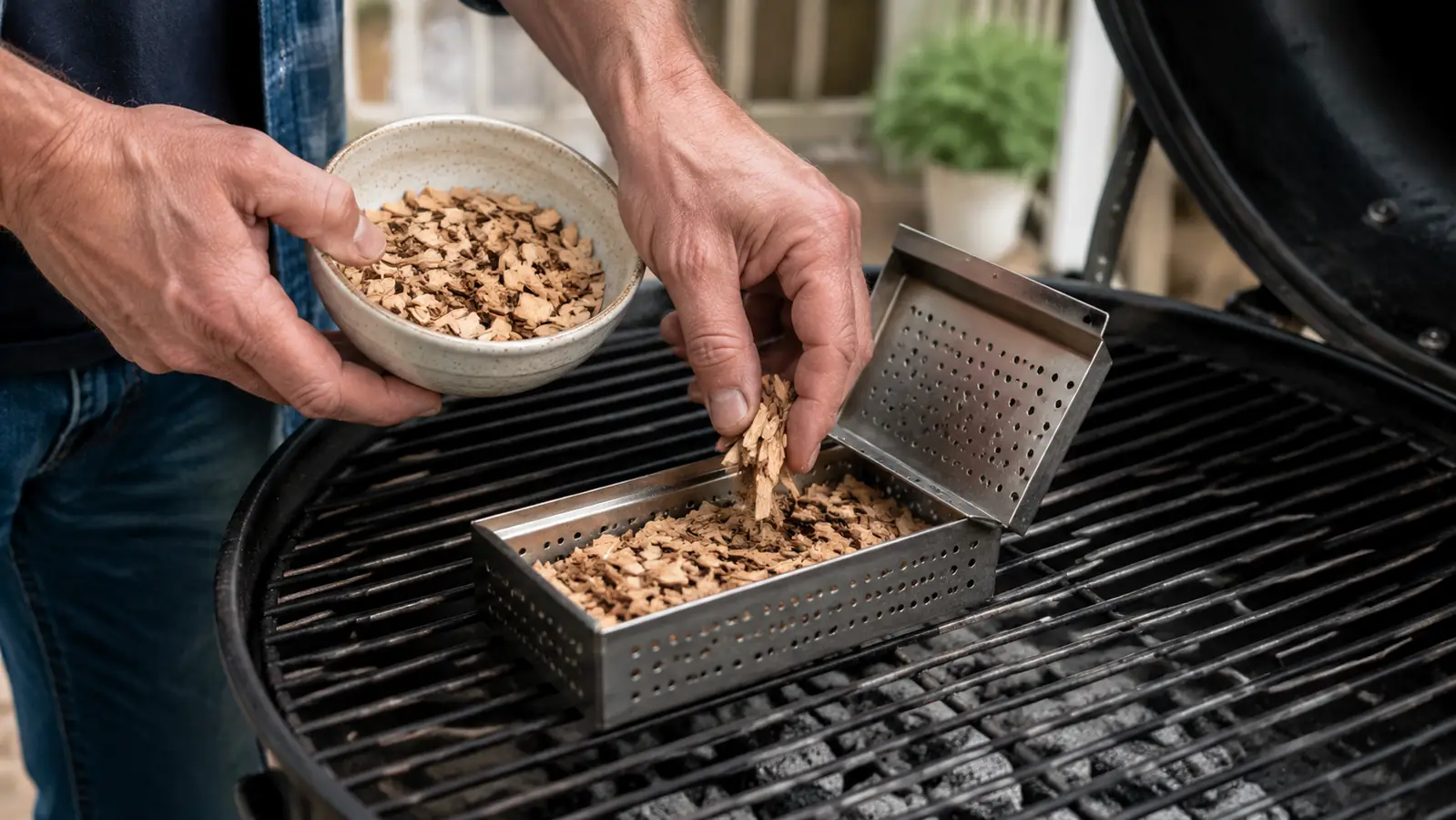
My standard setup is a 22-inch kettle with a full chimney of lump charcoal. I dump the lit coals on one side of the charcoal grate, put a disposable aluminum pan full of water on the cool side, and wait for the fire to settle around 250 degrees. Then I fill the Skyflame box about three quarters full with dry hickory chips, tap it on the counter to settle them, and set the box directly on the grate above the coals. The side vents face the fire, so the chips begin to smolder within a few minutes. The thin stream of blue smoke that curls out is exactly what I want to see when the lid goes down.
The first time I used the box, I made two classic mistakes. I soaked the chips for an hour because that is what the old tin instructions said, and I filled the box to the rim. The soaked chips just steamed for the first thirty minutes, and the overfilled box pushed the lid up so the smoke came out in puffs instead of a steady line. For the next cook, I left the wood dry, filled the box only to the three quarter mark, and let it sit on the coals for ten minutes before I put the meat on. The difference was immediate. The smoke stayed thin and blue, not thick and white, and that is the key to clean smoke flavor instead of a bitter one.
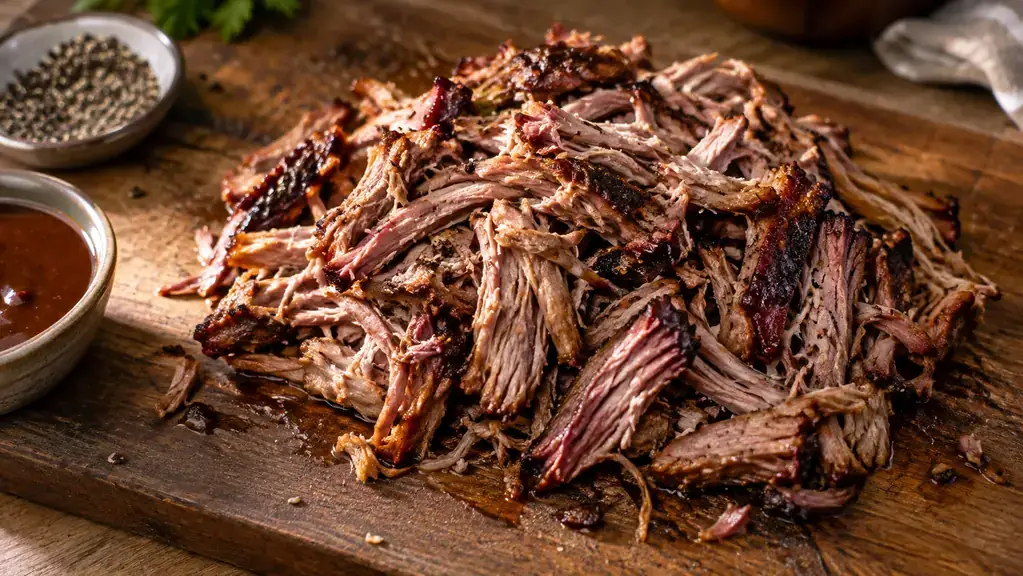
For most Sunday pork shoulders, I put one load of hickory in the box at the start and add a second load around the two hour mark. That gives me about four hours of smoke for a nine pound shoulder, which is all it needs because the meat stops taking smoke once the bark sets. On chicken thighs, I use a smaller amount of wood and set the box on the hot side of the grill just before I close the lid. I also used the box a few times on my offset stick burner, adding a handful of cherry chunks to a run of hickory logs, and it worked the same way there. The box is not picky about where you put it.
Measuring the Smoke: Output and Burn Time
After a full season, the thing that surprised me most was how evenly the Skyflame box burns. A foil packet gives you one big burst of smoke in the first twenty minutes and then nothing until you open the grill and wrap another packet. The Skyflame box, because the steel is thicker and the vent holes are on all four sides, holds a load of dry chips at a steady smolder for close to ninety minutes. I know that because I spent one hot August afternoon sitting on the deck with a stopwatch, watching how long a full load of hickory chunks produced visible smoke before it turned to ash.
The exact numbers depend on the wood. Hickory, which is dense, ran for about an hour and a half. Oak was close behind. Cherry, a softer wood, ran for a little over an hour. The box does not care what you feed it as long as you keep the chips below the rim and leave a little air space at the top. When I follow that rule, the temperature in my kettle stays more stable than I expected, within maybe fifteen degrees of where I set the vents, because the box acts like a small heat sink sitting on the coal bed.
The smoke itself is cleaner than what I got from foil packets. Packets smolder at a lower temperature and make the thick, white smoke that leaves a sour taste on chicken skin. The box sits directly over the coals, so the chips get hot enough to burn clean. The first time I cooked two chicken halves with a small load of cherry, Deb said she could taste the wood without the acrid bite she had learned to expect from my earlier attempts. That was the moment I stopped thinking of the box as a gimmick and started thinking of it as part of the grill.
Warping, Rust, and Cleanup After a Season
Now for the honest part. The biggest problem with cheap smoker boxes is warping, and this one is not completely immune. I bought the thicker steel version specifically because I had watched a thin tin box buckle in the middle within a month. The Skyflame box held its shape for about four months, and then I noticed the lid had a slight bow in the center. It is not enough to keep the box from working, because the vent holes are in the sides and chips do not need a tight seal to smolder. But if you set the lid on the box and look at it from the side, you can see the low spot.
Rust has not been a problem in eight months. I rinse the box in the sink every third or fourth cook, knock the ash out, and let it air dry on the counter. The steel still looks close to new, aside from scorch marks on the outside where it sat over hot coals. The one spot that needs attention is the inside corners, where a sticky mix of ash and grease will build up if I let it sit more than a few days. A quick scrub with a steel brush takes care of it, but you do have to intend to do it.
Cleanup is where the box earns its keep. A foil packet is single use, and I used to go through half a roll of foil every summer trying to add smoke to my cooks. With the Skyflame box, I dump the ash into the coals, give the box a rinse, and it is ready for the next cook. The whole process takes about three minutes from grill to shelf. The box does not have handles, so I move it with a pair of long tongs when it is hot. I also learned to set it on a trivet instead of the deck railing, because the bottom gets hot enough to scorch the paint.
Foil Packets vs. the Steel Box
I have spent enough summers making foil packets to have strong opinions about the difference. A packet is cheap and disposable, but it has three real flaws. It burns through fast, the smoke is inconsistent, and you have to wrap a new packet every time you want more wood. The Skyflame box fixes all three. One load lasts as long as two or three packets, the smoke is steady instead of bursty, and when it runs out you fill the same box again instead of reaching for the foil roll.
The trade-off is that the box takes up room on the grate and it gets hot. On my 22-inch kettle, I have to plan the cook so the box does not crowd the meat. I usually set it on the leading edge of the coal bed, closest to the cool side, and leave it there for the whole cook. That works for pork shoulders and other big cuts. For a skillet of chicken thighs, I pull the box off once the meat is on because I need the full grate for the cast iron pan. It is a small adjustment, and you learn it in the first cook.
If you already own a heavy cast iron smoker box or a foil packet system you are happy with, you probably do not need to change. But if you are still making packets because you have not found a box that lasts, the steel construction and side vents on the Skyflame model are what keep it going after a full season. That is the difference between a tool you reach for on purpose and a tool that ends up in the garage by August.
Where the Skyflame Box Falls Short
It is not a replacement for a real smoker. A stick burner gives you long, low, hands-free smoke that a small box can only approximate. The Skyflame box is also not a set and forget tool. If you start a brisket at eight in the morning and go to work, you will come home to a fire that has gone out or a box that has been empty for hours. I can work around that because I am usually outside with the meat anyway, tending the fire and adding a split when the offset needs one. But if you want to smoke something while you sleep, this is the wrong tool.
On a gas grill, the box would need a different setup. The instructions say to set it over a burner that is lit, but I do not run propane so I cannot vouch for the exact placement from experience. The side vents mean it should work with any heat source that can get the chips to smolder, but you would need to experiment to find the spot where it smokes cleanly instead of catching fire. On a charcoal kettle, that spot is easy to find because the coals are right there in front of you, and that is the reason my own season of testing was done over lump charcoal.
At the end of the season, I took the box out of the grill and looked it over. The slight bow in the lid, the scorch marks on the bottom, a few grease spots in the corners. None of it stops it from working. I filled it once more, lit a few coals in the chimney, and watched the blue smoke roll for ninety minutes. A cheap box would have rusted by now, and a foil packet would have burned out long ago. For a charcoal cook who wants real wood smoke without buying a second grill, that is enough.
What I Liked
- Thick steel showed no rust after a full season of charcoal cooks
- One load of dry chips smolders for close to ninety minutes at a steady rate
- Side vents let the chips breathe and keep the smoke clean and blue
- Three minute cleanup with no disposable foil packets
- Works on a charcoal kettle and on an offset smoker, and should adapt to gas with a little testing
Where It Falls Short
- Lid developed a slight bow after several months of hard use
- You have to reload every couple of hours for long cooks
- Takes up real estate on the grate and has to be moved with tongs
- Not a substitute for a dedicated smoker on overnight cooks
One dry load of hickory gave me ninety minutes of clean blue smoke, which is more than I ever got from a foil packet on the same kettle.
Who This Is For
This is a good fit if you cook on a charcoal kettle or drum and want a way to add real wood smoke without buying a dedicated smoker. It is especially useful for the first two hours of a pork shoulder or chicken cook, which is the window where meat picks up the most smoke. If you are the kind of cook who is outside with the grill anyway, adding a load of chips here and there is not a chore, it is part of the rhythm of the cook. The Skyflame box also suits anyone who has been burned by a cheap box that rusted out in a single season and wants something they will not have to replace next year.
Who Should Skip It
If all you cook is burgers, hot dogs, and quick steaks, a smoker box is a solution in search of a problem. You will not taste the difference on a fifteen minute sear. If you expect to load a box once and leave a brisket alone for ten hours, you are setting yourself up for disappointment, because the box will need attention every couple of hours. And if you already own a dedicated offset smoker or a pellet grill, you may not need the box at all. On my stick burner, I still reach for split oak or hickory most of the time, because a real log gives a deeper, longer smoke than a few chips in a box.
Need a smoker box that will still be working next summer?
Mine has been through a season of Sunday shoulders and it is still going. If you want real wood smoke on a charcoal cook without wrestling with foil, this is the one to look at.
Amazon Check Today's Price on Amazon →