These days I light every charcoal fire with a Weber chimney starter. I did not buy it because I was smart about grilling. I bought it after I ruined a rack of ribs with lighter fluid. It was a Sunday, the deck was full of people, and I had doused the charcoal out of habit, let it ash over, and put the meat on a fire that looked ready. An hour later the ribs had a sharp chemical bite underneath the rub. My wife Deb took one bite and quietly set it back on her plate. We finished the meal talking about everything except the ribs, and that night I started looking for another way to start a fire.
For most of my early grilling years, lighter fluid was the default. You squirt, toss in a match, and stand back for the whoosh. It gets the fire going, but the smell hangs in the air and sometimes shows up in the taste of the first meat off the grate. Add a flare-up right when you are trying to sear, and you have a stressful cook on your hands. I lived with all of that for a long time because lighter fluid was what everybody I knew used, and I had not seen the alternative.
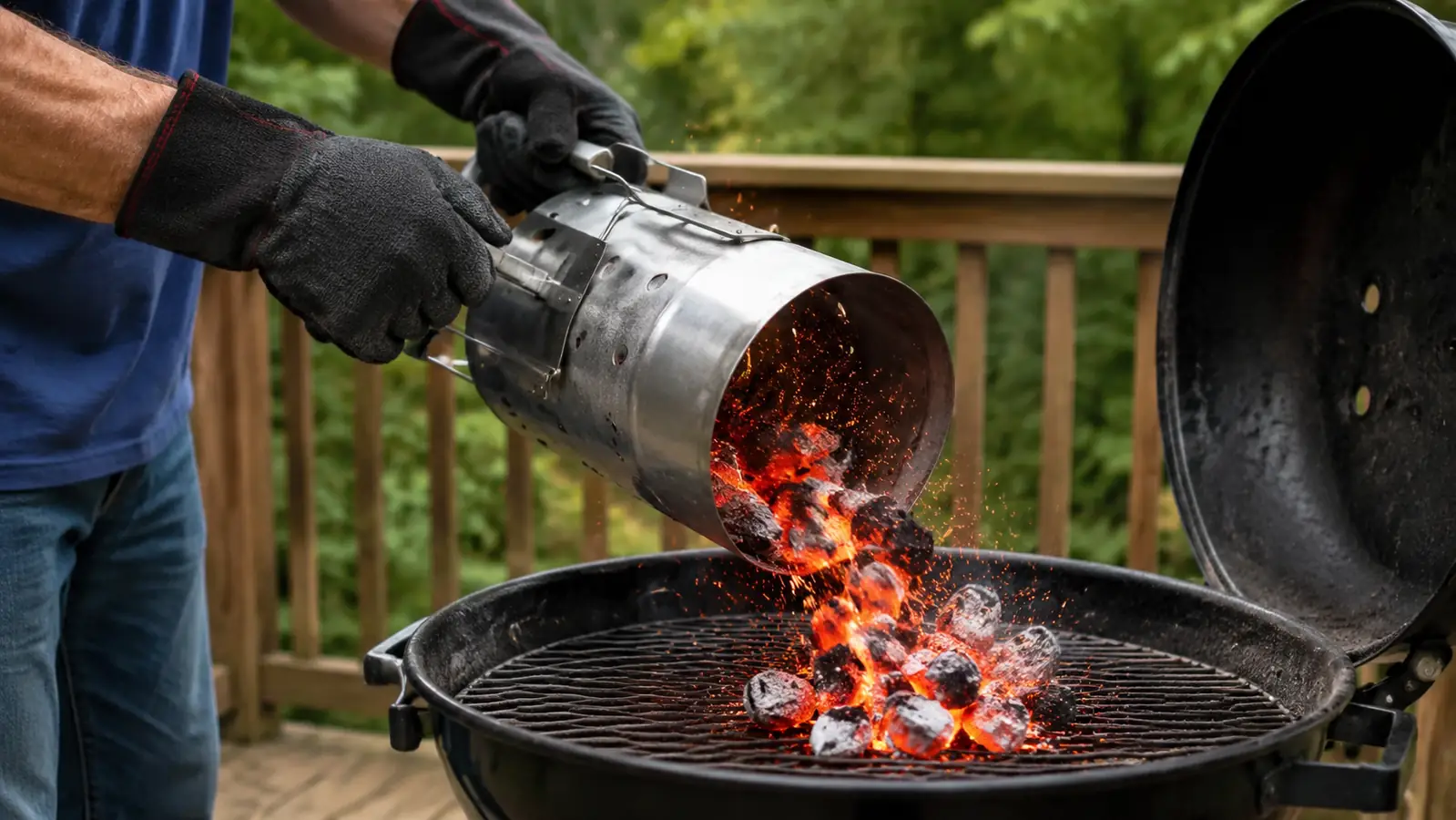
The alternative showed up at a cookout up the street. A neighbor who cooked competition pork shoulders had a tall steel cylinder with charcoal in the top and newspaper in the bottom. He set it on the ground, lit the paper, and let it sit. About fifteen minutes later he picked the whole thing up by the handle and dumped a glowing pile of coals into his smoker. I had never seen a fire started that cleanly. I asked him what it was, and he said it was a chimney starter. Then he gave me a look that said I was overdue.
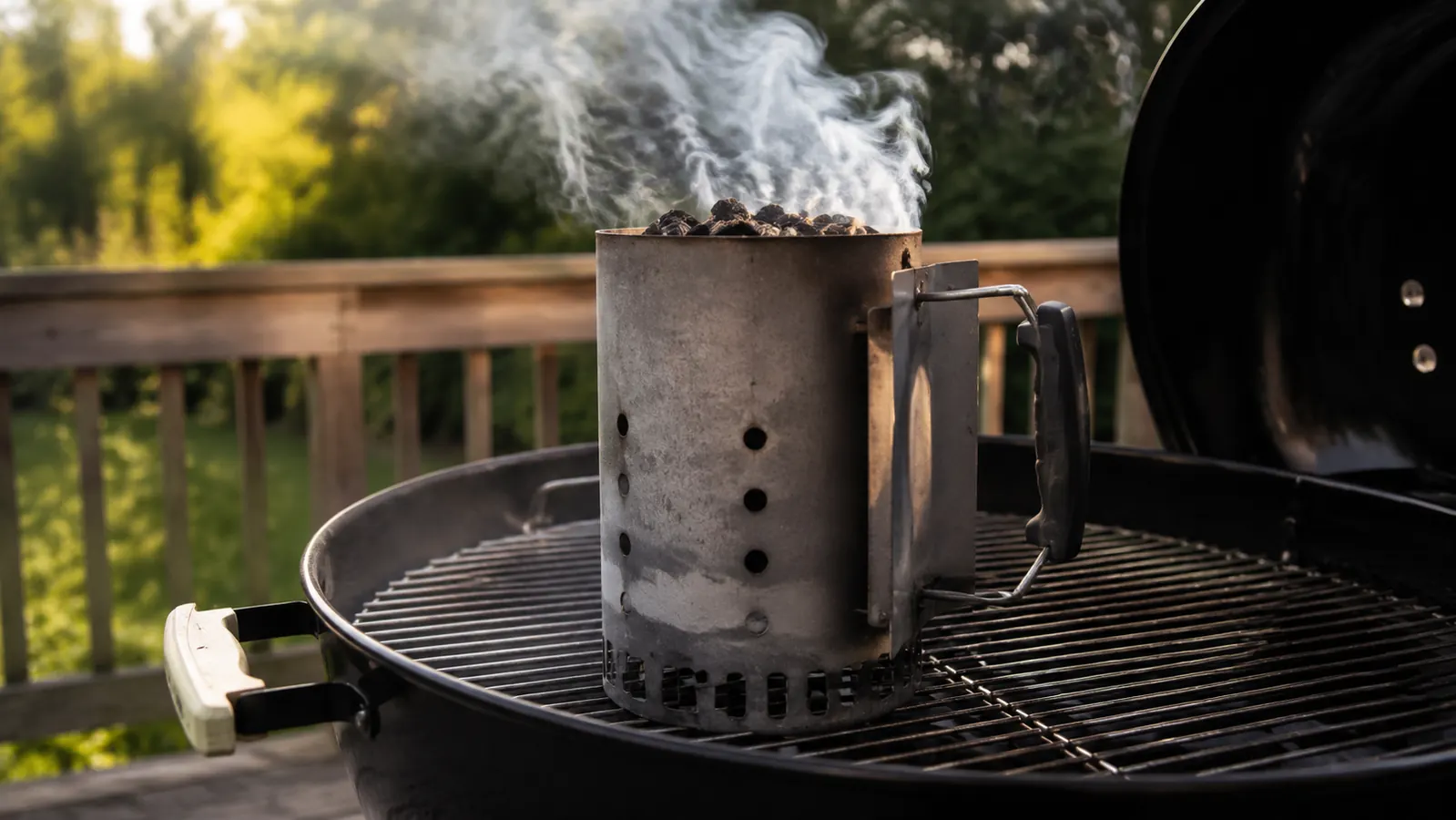
So I got a Weber Rapidfire chimney starter. It is one of the simplest tools on my deck, a steel cylinder with a grate inside and a heat shield on the handle. That is the whole design, and it works because hot air rises and pulls fresh air up through the coals. There is no motor, no battery, and nothing to break. No squirt bottle, no chemical smell, and no waiting for fluid to burn off before the meat goes on. The only thing it takes is a couple of sheets of newspaper and about fifteen minutes.
The first time I used it, I filled the top with lump charcoal from the galvanized can beside the deck, wadded up a couple of sheets of newspaper, and set the chimney on the charcoal grate of my kettle. Smoke puffed out for a minute or two, then the flames pulled up through the column and the coals started to glow from the bottom. Fifteen minutes later the top coals were dancing with orange embers. I dumped them into the kettle, let the grate heat up, and cooked a meal that tasted only like hickory and pork. No chemical bite, no off flavor, no standing around coaxing a weak flame.
A couple of sheets of newspaper and fifteen minutes are all it takes to get a chimney of lump charcoal glowing, and nothing in the meat tells you how the fire was lit.
A Clean Fire, Every Time, Without the Chemical Taste
The Weber Rapidfire chimney starter lights lump charcoal or briquettes with just newspaper. No squirt bottles, no wait, no lighter fluid aftertaste on your first batch of meat.
Amazon Check Today's Price on Amazon →Since that first cook, the chimney has been a permanent part of my deck setup. I use it on the kettle for a weeknight dinner for Deb and me, and I use it to start the stick burner when I am doing a long Sunday cook for whoever shows up. It handles both jobs without a fuss. Two Georgia summers and a few hard freezes have not put a bend in it, and the handle shield keeps the heat off your hand better than I expected.
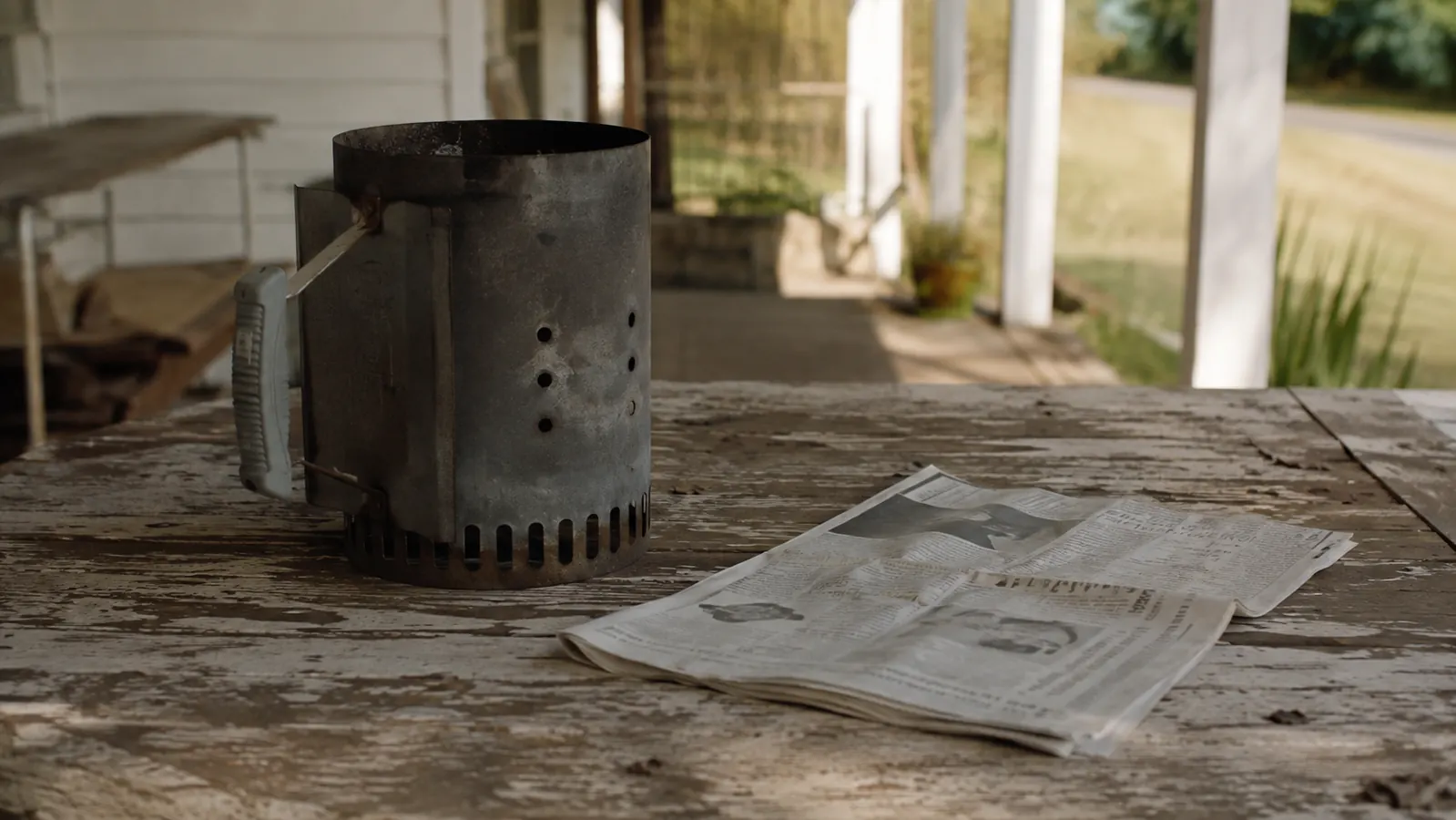
One thing nobody tells you is that a chimney starter needs room to breathe. The bottom has to pull air, so I set it on the grill grate or on a flat piece of concrete, never directly on the wooden deck. I also keep it dry on the covered part of the porch. Steel will rust if you leave it in the rain, and a rusted-out bottom is the most common way I have seen one fail. A few minutes of dry storage keeps that from ever happening.
There is a simple method to getting the fire moving fast. Loosely wad the newspaper and put it in the bottom chamber, then fill the top with charcoal without packing it down. The chimney works on draft, so air has to move up through the column. When the paper catches, the flames pull up through the coals, and in about fifteen minutes the top coals begin to glow. That is your signal to pour them into the grill. If they are not glowing yet, wait another five minutes instead of rushing it.
I will be honest about the limits. A chimney starter will not make you a better cook. It just makes the start of the fire reliable, so all your attention can go to the meat instead of a fussy flame. If you only cook over charcoal a few times a season, you can get by without one. But if you are like me and you light a fire most weekends, it earns a permanent spot next to the grill.
The other thing I would mention is that this particular Weber has taken a beating and stayed true. The heat shield still sits where it should, the grate still holds a full load of lump, and I have never once reached for the lighter fluid bottle since. That is the whole argument for owning one.
What I'd Tell You If We Were Sitting at My Kitchen Table
If you were sitting at my kitchen table, I would tell you this: the charcoal you use matters less than how you light it. Lump or briquettes, the start of the fire should not add anything to the meat. A chimney starter is a thirty-second setup and a fifteen-minute wait, and it will outlast the excuses most of us make for keeping the squeeze bottle around. My only regret is that I let a whole rack of ribs teach me the lesson when a five-minute talk with my neighbor would have done the job sooner.
Give It One Cook
Start your next charcoal fire with the Weber Rapidfire chimney starter and see if you miss the lighter fluid. Most people do not.
Amazon Check Today's Price on Amazon →