Ask two people which griddle insert holds up longer and you will get two opinions, each defended like a family recipe. Put me down for the plain answer: it depends on which kind of failure you can live with. Cast iron rusts when you neglect it, and rust is fixable if you catch it early. Steel warps when you overshoot it, and a warp never heals. Over three Sundays this fall I ran the Utheer 25 by 16 inch pre-seasoned cast iron griddle against a stainless steel insert on my charcoal setup to find out which one I would still trust two years from now. The iron is the one that stays. Not because steel is bad, but because cast iron fails in ways you can fix, and steel fails in ways you cannot.
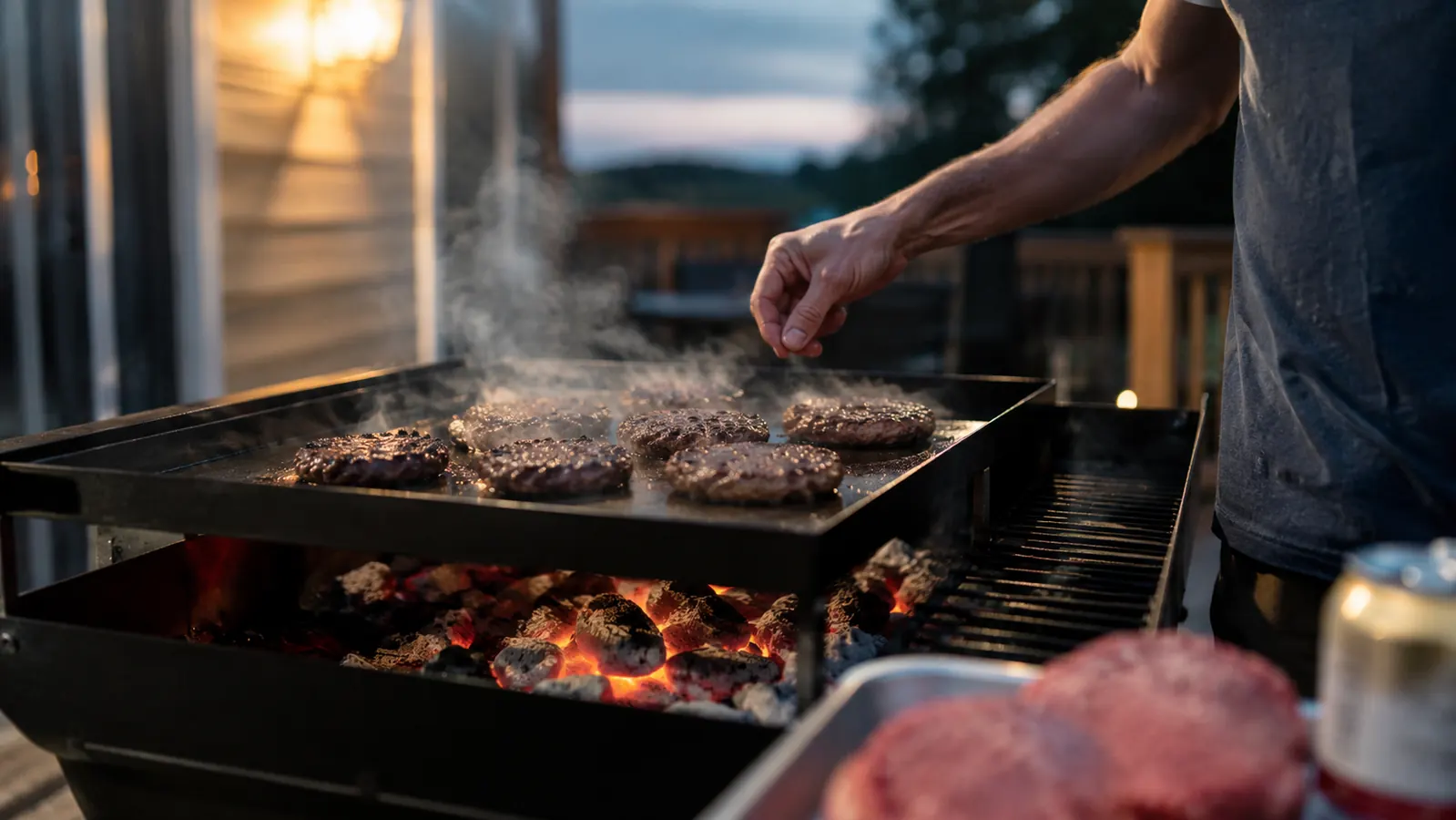
My test rig is not a show kitchen. I cook on a 22 inch kettle and an offset stick burner I welded a new baffle into years back, and I burn lump charcoal with split oak and hickory from my own place. A rectangular 25 by 16 inch plate will not sit flat across a round kettle, so I ran the comparison in the offset cook chamber with the insert set as close to the firebox as the grate allowed and a bed of oak coals pushed up to that end. That gave me a surface hot enough to sear, which is the same idea as a gas grill with the grates pulled and the burners on high. I cooked the same menu on both inserts: smash burgers for a crowd of eight to ten, a full breakfast of bacon and eggs for Deb and whoever stayed over Saturday, and a pan of onions and peppers to use through the week. Same fuel, same fire, same food. The only difference was the metal.
| Utheer Cast Iron Griddle | Steel Griddle Insert | |
|---|---|---|
| Heat retention | Holds its temperature when you drop cold burgers on it; the far side stays hot enough to keep searing. | Recovers slowly after a big load; the edges can fall out of searing range. |
| Warm-up time | Give it ten to fifteen minutes to soak up the heat before food goes down. | Ready in about five minutes and cools back down when you want it to. |
| Weight | Solid and heavy; you will use two hands to lift it off the grill. | Usually less than half the weight; easy to pull, rinse and store. |
| Sticking over time | Seasoning builds with every cook; eggs release clean after the first few uses. | Smooth surface grabs food; plan on a little extra oil. |
| Rust if neglected | Iron blooms orange if you leave it wet for a weekend. | Steel, especially stainless, shrugs off rain and dew that would spot iron. |
| Warping risk | Thick iron holds flat for years; it cracks from a hard drop instead of bending. | Thin steel can bow over a hot spot, and a warp never comes out. |
| Likely lifespan | Decades with basic care; it will outlast the grill it sits in. | A good thick steel plate can last a decade; a thin one can be done in two seasons. |
| Best at | Smash burgers, bacon, pancakes, anything you want to leave alone until it browns. | Quick vegetable work and stir fry style cooking with constant attention. |
Where the Utheer Cast Iron Griddle Wins
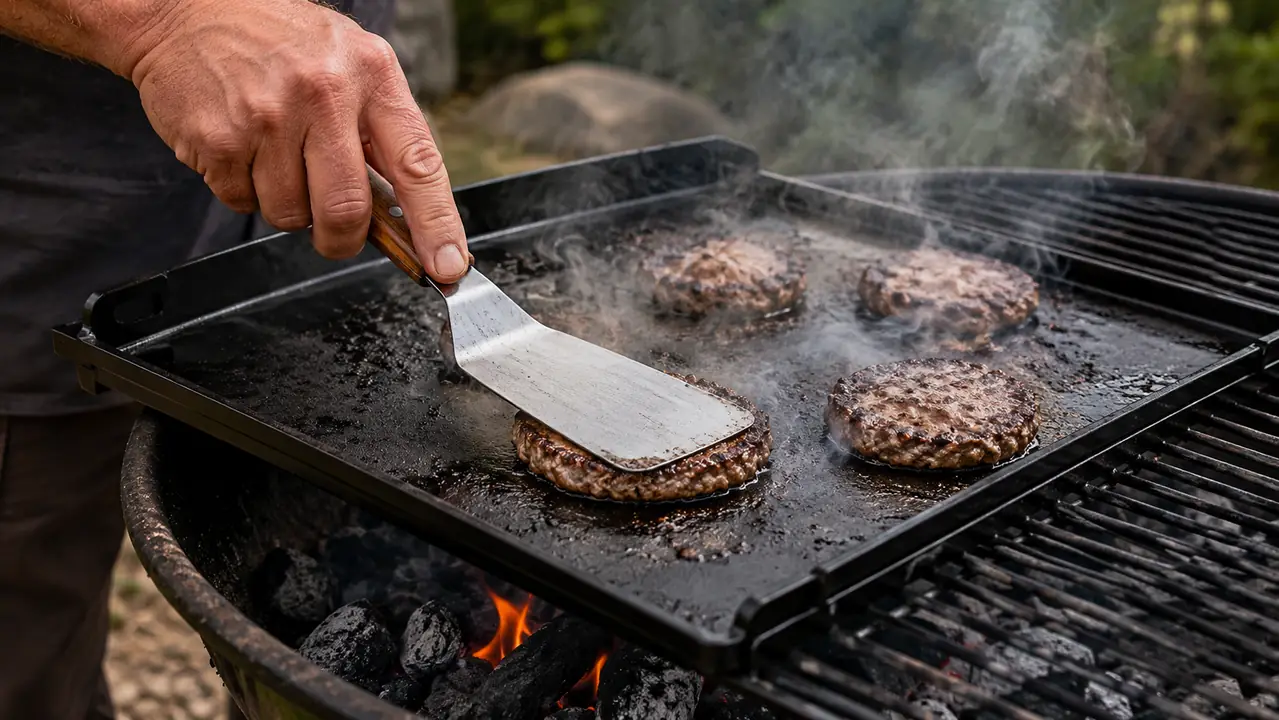
Cast iron wins before the food hits the plate because it holds heat like a savings account and spends it slowly. I loaded the Utheer with eight cold burger patties at once and the surface barely blinked. Every patty hit a hot surface, developed a dark crust in the first minute, and released clean when I went to flip. On the steel insert, the middle dropped out of searing range under the same load and I stood there waiting for it to climb back while the first batch went cold. If you cook for a crowd, that gap is the whole ballgame. Fire does not wait for a griddle to catch its breath.
The second reason I kept reaching for the Utheer is that the surface gets better with use instead of staying the same. Steel is what it is on day one and what it is on day fifty. Cast iron builds a layer of seasoning, so by the third Sunday those eggs were sliding around with nothing more than a smear of butter. The Utheer arrives pre-seasoned, which means you are not doing the oil, heat, cool, repeat dance before your first cook. I still ran bacon and burgers first so the factory coat had a chance to set before I trusted it with eggs. That is just common sense with any new iron.
Then there is staying flat, which is what people usually mean when they ask what holds up. A thick cast iron plate holds its shape. This one has been through hot fires, a cold Georgia drizzle, and my normal level of abuse, and it still sits flat on the grate with no rocking. Steel wants to bow when the middle gets a blast of heat and the ends stay cool. Once a plate bows, oil pools in the low spot, food cooks uneven, and nothing you do to the surface fixes the geometry. Flat is not a luxury. Flat is the whole job.
The care routine is shorter than the rumors. After the cook I scrape the plate with a metal spatula while it is still warm, wipe it with a paper towel, then rub in a thin coat of oil with a fresh towel. Two minutes, and it is the same routine I have used on cast iron skillets for forty years. People who call cast iron high maintenance are usually the same people who leave it in the sink overnight. Treat it like a tool and it treats you like a cook.
Here is the part that surprised me, because I did not expect the difference to show up on a breakfast cook. On the steel insert, bacon left a sticky film that grabbed the next batch of eggs. On the cast iron, the same bacon left a light layer of fat that worked like a release agent, and the eggs slid right across it. That matters on a Sunday when you are cooking for ten and trying to keep everything moving. A griddle that works with you instead of against you makes the whole morning easier.
Where a Steel Griddle Wins
Now I will give steel its due, because it wins some real arguments. The first is weight. The Utheer is a solid slab of iron, and at 58 I notice it every time I lift it off the cooker to clean it. It takes two hands and a little breath. A steel insert of the same size usually comes in at less than half the weight, and that matters if your griddle lives in the shed and has to travel to the grill for every cook. If your back is what you are trying to protect, steel is the easier roommate.
The second edge is speed, in both directions. Steel comes up to temperature in about five minutes, where cast iron needs ten to fifteen to soak the heat all the way through. Steel also answers when you pull the heat back, which makes it the better tool on nights when you are cooking shrimp, zucchini, or anything that needs the temperature to change in a hurry. If most of your flat top cooking is on the lower side and you like to adjust as you go, steel is genuinely easier to live with.
The third edge only shows up if you are honest about your own habits. Cast iron rusts when it is left wet, and it will do it overnight in humid north Georgia weather. Steel, especially a stainless insert, shrugs off rain and dew in a way iron never will. If you know in your heart that you will not oil a hot plate after every cook, steel is the more forgiving choice. Forgiving is its own kind of durability.
And when I talk about steel warping, I am not describing a rare defect. I am describing what a thin sheet does over a live fire. The metal expands where it is hottest, and when the edges stay cool the plate has nowhere to go but up. You can slow that down by warming it gradually and keeping the fire even, but you are fighting the geometry the whole time. Iron does not need that babysitting. It is thick enough to spread the heat before it moves.
There is one more steel advantage that is harder to measure but worth naming. Steel does not demand a preheat ritual. On a weeknight when I only wanted two burgers, I could fire the steel insert and be eating in twenty minutes. Iron asks for a longer warm up before the surface is truly ready, and on a busy week that feels like a real cost. If most of your griddle cooking happens on weeknights rather than Sunday mornings, steel fits the schedule better.
The cast iron griddle I would pick again
The Utheer 25 by 16 inch pre-seasoned cast iron griddle holds heat the way iron should, builds a slick seasoning, and stays flat cook after cook. If you want one upgrade that will still be working ten years from now, this is the one I would start with.
Amazon Check Today's Price on Amazon →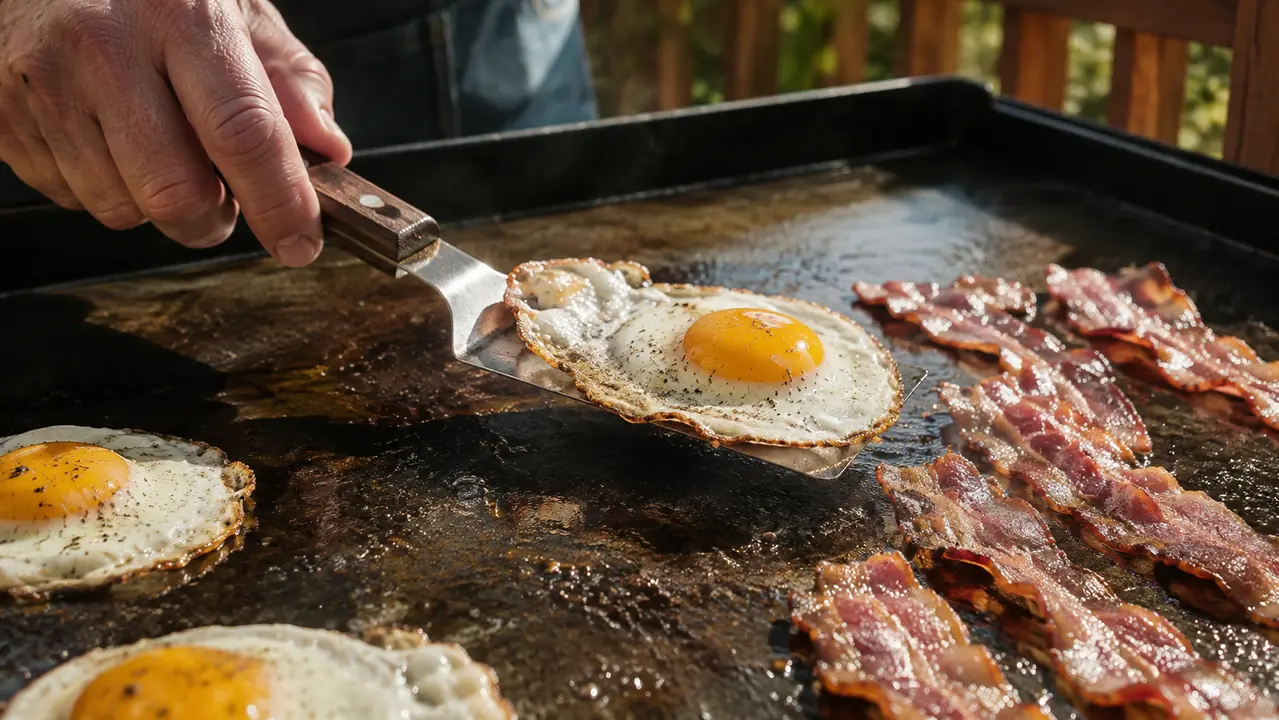
Who Should Buy Which
Buy the Utheer cast iron griddle if you cook burgers and breakfast for a crowd, if you already own a cast iron skillet and know the two minute routine, and if you want to buy this once and forget about it for a decade. You trade a little weight and a little patience for heat retention and a surface that keeps improving. For Sunday cooking, I make that trade every time.
Buy steel if the griddle has to be portable, if you mostly cook things that need quick heat changes, or if you know the insert will sit out in the weather because that is just how your deck runs. Steel forgives the things cast iron holds against you. There is no shame in that choice. It is the same reason I keep a stainless work table in the shop. Some tools are meant to be forgiving.
One practical note before you order anything: measure your cooking surface first. The Utheer is a 25 by 16 inch rectangle, so it wants a rectangular bay about that size, like the space where the grates sit on most gas grills or the cook chamber of a barrel style charcoal cooker. It will not sit flat across a round 22 inch kettle. A square plate does not fit a round hole, so kettle owners should look for a round insert made for that shape.
If you run a gas grill, the same logic holds with one thing I have to flag. I cook over charcoal and wood, so I will not pretend to have years of propane flame patterns under my belt. The principle is the same, though. The insert sits over the burners with the grates off, most grills run hotter in the middle, and a thick iron plate tolerates that uneven heat far better than a thin sheet does. If your grill has a hot middle, and most do, cast iron is the safer bet against warping.
So which one holds up longer? Cast iron, with one condition attached: you have to do the two minute wipe and oil routine after cooking, and you cannot leave it naked in the rain. Do that and it will outlast every grill on this deck. Steel will forgive you more along the way, but on the two things I care about most, holding heat and staying flat, the Utheer cast iron griddle is the one I would trust for the next ten years. That is the long answer. The short answer is the same. Buy iron, take care of it, and stop shopping.
Buy iron if you will give it two minutes a cook
Measure your grill first, then decide. If you will wipe it down and oil it after cooking, the Utheer cast iron griddle is the longer lived buy. Steel is lighter, but iron is the one that holds up. Check today's price and decide with the numbers in front of you.
Amazon Check Today's Price on Amazon →